
The final will give us a winner. But the real legacy of the 2026 World Cup is still being written far from the pitch. At borders, on policed streets, inside Fifa’s opaque black-box governance, in betting markets, around authoritarian states and among the people Fifa’s spectacle pushed aside.
Op-ed by Stanis Elsborg, head of Play the Game, a Denmark-based initiative that promotes democratic values in world sports with an emphasis on freedom of expression, transparency, and open dialogue.
With two days left of the 2026 World Cup, Fifa is already preparing the story it wants the world to remember.
Record crowds. Full stadiums. Great goals. Flags, anthems, children walking beside their heroes. A final weekend wrapped in the familiar promise that football can unite the world.
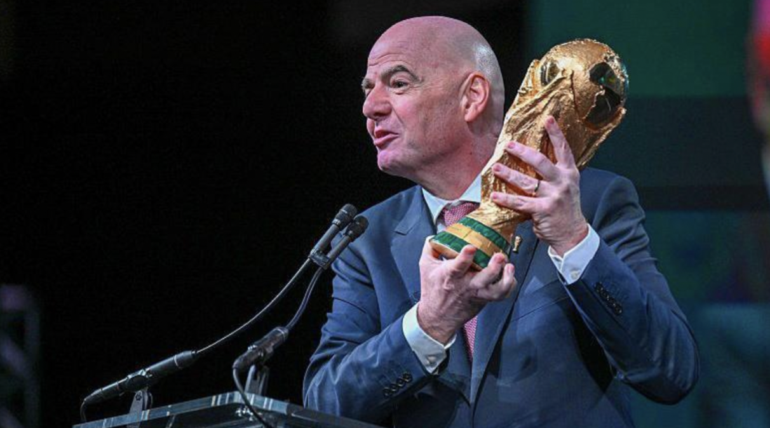
Before the tournament, Fifa’s president Gianni Infantino, said he hoped this World Cup could “really unite the world.” Fifa’s motto puts the idea even more simply: “Football Unites the World.”
But legacy is not written only in finals, goals and attendance figures.
It is also written in the streets around the stadiums. At the borders fans could not cross. In the disciplinary decisions Fifa refuses to explain. In the betting and data markets feeding off the game. And in the sponsors whose logos followed the tournament from start to finish.
If this World Cup has a legacy, it should include the people and stories Fifa’s spectacle tried to push out of view.
The streets are talking
In Vancouver, that legacy was visible before the first ball was kicked. The city’s Downtown Eastside, a neighbourhood beside BC Place, is home to many low-income residents, Indigenous people and unhoused people.
Fifa and local organisers promised human rights protections, but advocates warned that the plans risked becoming little more than a performative exercise. Vancouver’s own human rights plan acknowledged risks to unhoused residents, yet critics said it lacked concrete protections against street sweeps, displacement and intensified policing.
Then, during the tournament, Guardian journalist Sharon Nadeem reported from Vancouver that residents and community researchers described the World Cup as coinciding with a supercharged policing campaign in the Downtown Eastside: repeated patrols, bag searches, handcuffing, fines and efforts to move vulnerable people out of public view.
In a neighbourhood at the centre of British Columbia’s toxic drug crisis, Nadeem’s reporting showed why displacement is not cosmetic. It can sever people from supervised consumption sites, harm-reduction workers and peers who may be the last line between an overdose and death.
Vancouver officials deny that policing changed because of Fifa. But when a host city expands control over public space in order to deliver a “clean and welcoming environment,” the question becomes unavoidable: clean and welcoming for whom?
Mexico offers another version of the same problem. In Mexico City, Monterrey and Guadalajara, communities have raised concerns over World Cup-related projects linked to water scarcity, gentrification, privatization, displacement and pressure on fragile ecosystems. Behind the colourful images of fans and stadiums lies the old mega-event question: who pays the price when a city is reshaped for a global audience?
Unity stopped at the border
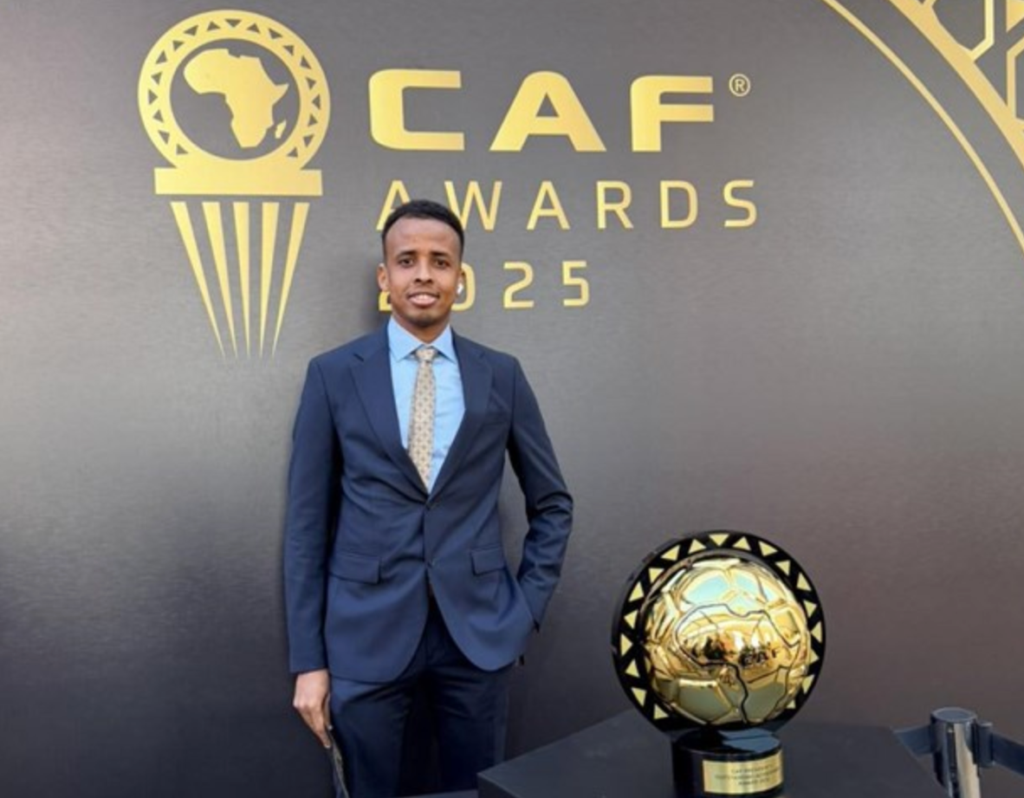
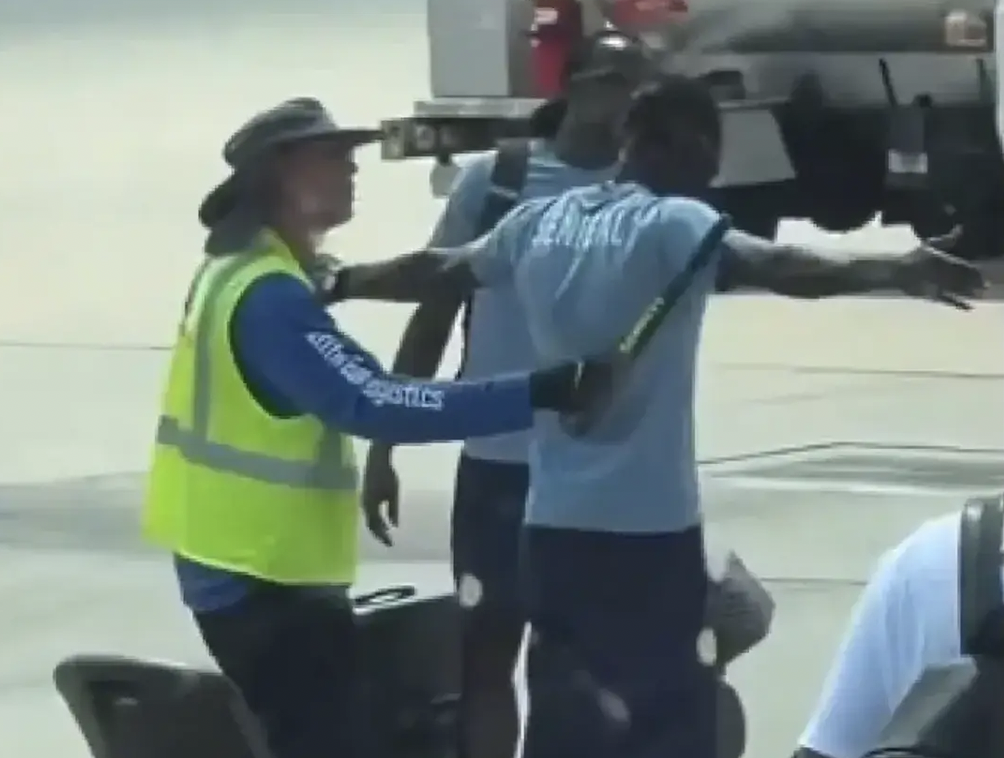
In the United States, Fifa’s unity message ran directly into the border. Somali referee Omar Artan, selected by Fifa to officiate at the World Cup, was denied entry and deported after arriving in Miami. Fans from qualified countries including Haiti, Iran, Senegal and Côte d’Ivoire faced U.S. travel bans or severe restrictions that made it impossible for many to support their teams in person.
The Iranian team faced another version of the same contradiction. Amid the United States war with Iran, the squad had to base itself in Tijuana, Mexico, despite playing its group-stage matches on the U.S. West Coast. U.S. authorities eventually granted visas to the Iranian players, but several members of Iran’s support staff were denied entry, and U.S. authorities said the team could enter the country only the day before matches and had to leave immediately afterward. The World Cup’s promise of unity looked very different when one host country was receiving a team from a country it was at war with.
So much for unity.
If the World Cup claims to be a gathering of the world, then the ability of referees, teams, journalists and fans to cross borders matters. The tournament cannot be celebrated as a festival of global belonging while some of the people who made it global are kept outside the gates.
A president’s phone call and Fifa’s black box
The American leg of this World Cup also raised deeper questions about political power and football governance. When U.S. forward Folarin Balogun received a red card, President Donald Trump said he called Infantino and asked him to review the suspension. Fifa later suspended Balogun’s one-match ban, allowing him to play against Belgium. Fifa denied political interference and insisted its judicial bodies are independent.
According to reporting by Martyn Ziegler of The Times, the decision was taken by one person alone: FIFA Disciplinary Committee chairman Mohammad Al Kamali. The Financial Times has also reported on the opaque workings of Fifa’s disciplinary committee, including the fact that its last 100 published decisions had been made by just a single person, with the chairman allowed to rule alone or delegate that power to someone else.
That should trouble anyone who cares about the integrity of world football. Why was one of the most controversial disciplinary decisions in World Cup history decided without the full committee? Where is the written reasoning? Fifa repeatedly describes its judicial bodies as independent. But what does “independent” actually mean in practice?
Mohammad Al Kamali’s background raises legitimate governance questions, too. When he joined Fifa’s Ethics Committee in 2017, he was also serving in several roles across UAE public life, sports governance, arbitration and law, including as a member of the UAE Federal National Council, secretary general of the UAE National Olympic Committee, board member of Dubai Sports Council, senior board member of the UAE Youth Development & Sports Authority, head of Independent Integrity at the Asian Football Confederation, CAS arbitrator and partner in his own law firm.
So much for Fifa’s commitment to political neutrality.
Of course, none of this proves misconduct. But secrecy corrodes trust. Transparency is not a threat to judicial independence. It is one of its foundations.
The gambling frontier
This World Cup has also shown how quickly football’s commercial system is moving into areas it has barely begun to understand.
Fifa’s growing ties to betting operators, prediction markets and data companies should be a central part of any serious assessment of this tournament’s legacy. The global betting economy is not just a harmless side market. In many places, it operates illegally and creates serious integrity risks. In its darkest corners, gambling-related crime is tied to criminal networks, forced labour and online scam operations in Asia.
Some of these criminal networks have even been able to sponsor major European football clubs, using the sport to clean their image, build legitimacy, and move closer to the mainstream.
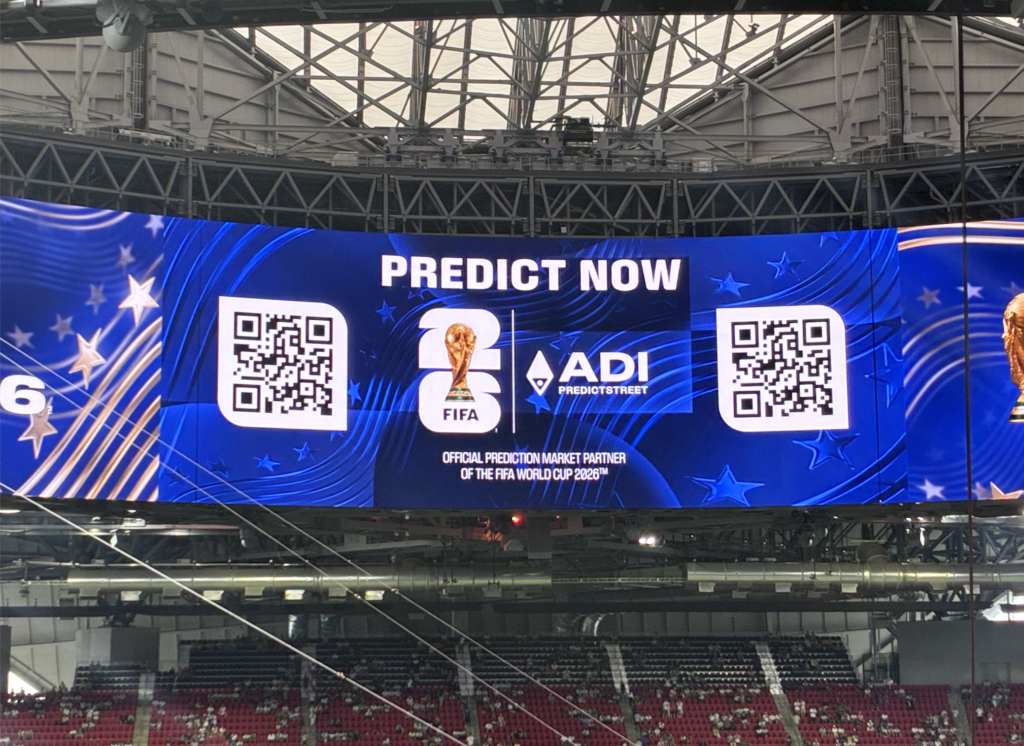
World Cup data feeds these systems. Every match, every incident, every player movement can become part of a gambling economy that reaches far beyond what fans see on television. Football is commercialising these opportunities faster than it can police them – or perhaps faster than it wants to.
For the 2026 World Cup, Fifa also embraced prediction markets through a deal with brand-new operator ADI Predictstreet. The agreement was quickly scrutinised by investigative journalist at Josimar, which raised a series of concerns about the company, including the absence of a functioning website, a Gibraltar licence reportedly granted in just nine days at the discretion of Gibraltar’s minister of finance, and links to Abu Dhabi’s royal family.
The logos that followed the tournament
The Middle East enters this World Cup legacy in another way, too: through some of Fifa’s most powerful sponsors.
Qatar Airways. Aramco. Saudi Arabia’s Public Investment Fund (PIF).
Their logos were impossible to miss. Their stories were far less visible.
Aramco is Saudi Arabia’s state-controlled oil giant. Qatar Airways is the state-owned airline of Qatar. The Public Investment Fund, named by Fifa as an official tournament supporter for this World Cup in North America and Asia, is the Saudi sovereign wealth fund chaired by Crown Prince Mohammed bin Salman.
At Play the Game, we have mapped Saudi Arabia’s expanding sports network. Aramco, the PIF, Riyadh Air, Visit Saudi, Neom and other Saudi state-linked entities are woven into football, golf, tennis, boxing, esports and motorsport. The familiar term “sportswashing” no longer captures the scale of the project.
Saudi Arabia is trying to replace one set of stories with another: repression with so-called reform, oil wealth with innovation, executions with entertainment, political control with women’s empowerment, and authoritarian rule with national progress.
Sport is the perfect vehicle. It offers emotion without scrutiny, visibility without accountability and applause without political debate.
What the Saudi story hides
That is why the Kingdom of Saudi Arabia’s partnership with Fifa matters. Through Aramco and the PIF, the Saudi state is buying access to football’s moral vocabulary: unity, development, sustainability, equality and joy.
Fifa speaks of sustainability while partnering with one of the world’s most powerful fossil fuel companies. It speaks of women’s football while giving rights to Saudi state-linked money. More than 100 female footballers have urged Fifa to end the Aramco partnership, citing Saudi Arabia’s restrictions on women, LGBTQ people and fundamental freedoms, as well as Aramco’s contribution to climate change.
The stories Saudi Arabia – with help from Fifa and the wider sports world – are trying to obscure are painfully concrete.
Saudi Arabia is an absolute monarchy where power is concentrated around the royal family and where dissent is criminalized. Activists, journalists and critics frequently face arbitrary arrests, torture, and even assassinations – most notoriously in the brutal killing of journalist Jamal Khashoggi in 2018.
Women’s rights are often presented as one of the kingdom’s great reform stories. The reality is darker. Saudi women still face legal and social barriers in inheritance, child custody and personal autonomy, while the male guardianship system continues to restrict their freedom. Women who have spoken out have paid a severe price.
Loujain al-Hathloul, who campaigned for women’s right to drive and against the male guardianship system, was imprisoned and, according to Amnesty International, subjected to torture, sexual abuse and other mistreatment. Manahel al-Otaibi was sentenced in 2024 to 11 years in prison under Saudi Arabia’s anti-terror laws after advocating female empowerment on social media.
These women should be part of any honest discussion of Saudi Arabia’s reform narrative.
So should the migrant workers who make up a large part of the Saudi labour force and continue to face widespread and systemic abuse, including exploitative working practices, harsh environments and poor living conditions. So should the Ethiopian migrants and asylum seekers whom Human Rights Watch says were killed by Saudi border guards while trying to cross from Yemen.
Recent reporting based on FairSquare research has added another layer: migrant workers in Aramco’s supply chain have allegedly faced serious safety risks, excessive working hours, substandard housing and difficulty obtaining compensation after injuries or deaths.
When Aramco’s and the PIF’s logo’s appeared throughout this World Cup, the Saudi state tried to push all this out of view: emissions and oil wealth, prisoners and silenced women, executed defendants and exploited workers, victims and critics of a state that has learned how to turn football into cover.
Qatar’s story did not end in 2022
Qatar Airways performs a similar function for Qatar.
To the casual fan, it is a premium airline. In political terms, it is one of Qatar’s most effective global image machines. Qatar understood earlier than most that sport could give a small, wealthy state visibility far beyond its geography.
The 2022 World Cup was the clearest expression of that strategy, but the strategy did not end with the final in Lusail. Through Qatar Airways, beIN Sports, Paris Saint-Germain, Qatar Sports Investments and a dense network of relationships inside football, Qatar has embedded itself in the global sports system.
Abdullah Ibhais, a former media manager for Qatar’s World Cup organising committee, has described Qatar’s response to criticism before the 2022 tournament as a system of deflection, discrediting and denial. He was later imprisoned in a case Qatar said concerned corruption, while Ibhais denied the charges. Human rights organisations and a United Nations report have raised serious concerns about his conviction and imprisonment. The United Nations report supported key parts of Ibhais’ account and found that he had been imprisoned and convicted on false grounds.
After his release, Ibhais continued to speak publicly about Fifa, Qatar and migrant workers. His case is a reminder that Qatar’s World Cup strategy was also about controlling the story told about them.
That is why Qatar Airways’ continued presence in Fifa’s World Cup universe should not be treated as a routine sponsorship. It keeps Qatar inside football’s imagination long after the scrutiny of 2022 has faded. It helps transform a contested World Cup legacy into a story of global mobility, luxury and connection.
Who gets to write the ending?
Fifa will say the 2026 tournament developed football. It will point to packed stadiums, new markets, record revenues and the joy of fans. Those things may be real.
But they are not the whole legacy.
The darker legacy of this World Cup is a warning about what global sport has become: a stage where people can be moved aside, borders can contradict inclusion, politicians can test the independence of football justice, betting markets can expand faster than integrity systems, and authoritarian states and their leaders can buy proximity to the world’s most beloved game.
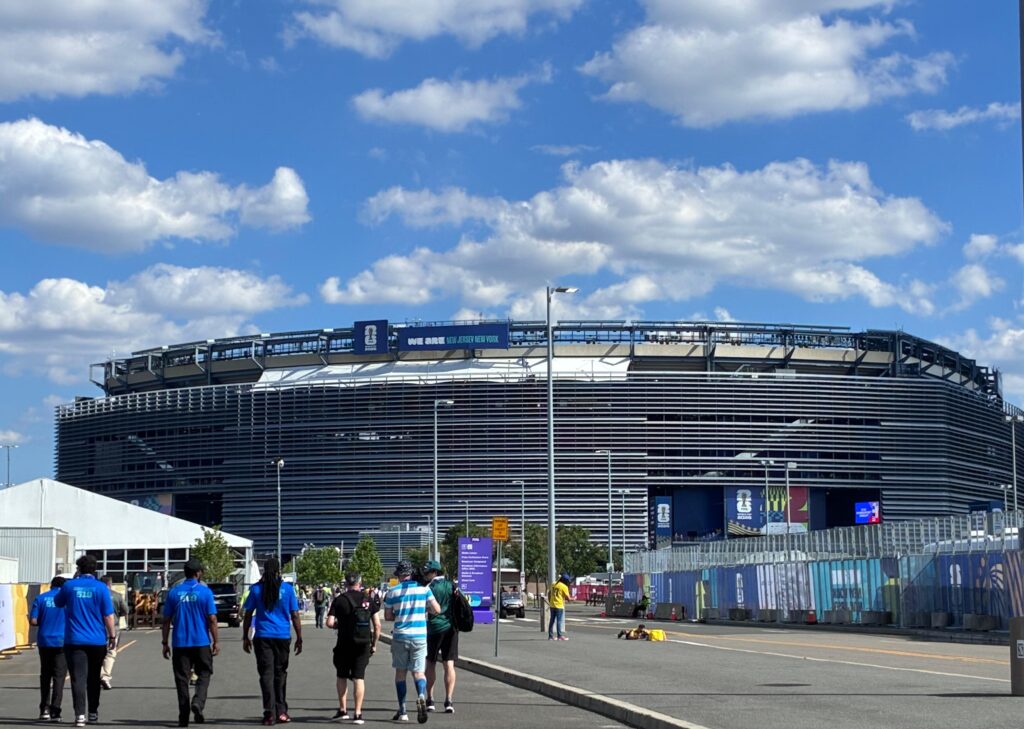
The final will give us a winner. But it will not be the final word on this World Cup.
That truth is still being written – by residents in Vancouver who say the tournament brought intensified policing to their neighbourhood; by communities in Mexico resisting the costs of mega-event development; by fans who could not cross borders to support their teams; by journalists and researchers examining Fifa’s disciplinary system, its betting ties and its sponsors; and by workers, whistleblowers and human rights defenders whose stories rarely fit into the official highlight reel.
More stories will surface. More documents will be read. More questions will be asked. And the real legacy of 2026 World Cup may ultimately – and hopefully – be shaped less by Fifa’s slogans than by the journalists and communities who continue to investigate what happened around the tournament while the world was watching the football.
The 2026 World Cup has produced beautiful football and unforgettable images. But it has also shown how easily the beautiful game can become a beautiful disguise.
Fifa should not be allowed to write the legacy alone.
Josimar regularly opens its columns to independent guest contributors who wish to comment on the most pressing issues in world football. These columns solely reflect the opinion of their authors. Their publication does not constitute an endorsement on Josimar’s behalf, but a way to encourage and promote debate within the football community.