
Every World Cup is meant to have a legacy, this one could be the moment when the process of reclaiming and reforming the governance of football begins.
By David Goldblatt, author of The Ball is Round and ‘Reboot Fifa‘ advisory board member.
Football is simply a remarkable thing. For a month now the majority of humanity has entered the dream space of the World Cup. While two devastating regional wars are raging, while the wild gyrations of the world economy promise only chaos, and across this seething, heating planet wildfires burn, we have reserved our deepest thoughts and emotions for the game. Of course, who wouldn’t choose the Azteca over the Strait of Hormuz? Who doesn’t want to be in a place where we might see a better version of ourselves? It is the destruction of that sliver of utopia that makes the IDF’s assassination of Mohamed al-Wahidi, the man responsible for organising Gaza’s World Cup watch parties, so unbearably cruel.
Our need for this must run very deep right now, for Fifa, the American federal government and their respective presidents have done their best to make the World Cup as an unattractive proposition as possible. The charge sheet is long: eye-watering, expensive tickets, a rapacious resale system, absurdly costly parking, transport and food; the hydration breaks that have become advertising breaks; the excruciating cut aways to a phalanx of bored Fifa legends and football nomenklatura, or president Gianni Infantino himself with a motley selection of heads of state, and Tik Tok influencers. Fifa’s control over the content of the spectacle actually obliges broadcasters to show Infantino during every half of football where he is present, and not when he is on his phone, and not on the stadium screens. No doubt he would receive the same kind of booing that the ‘hydration breaks’ regularly receive. The horror of the half time ‘show’ that will desecrate the final is yet to come.
Fifa has been keeping some very unsavoury company too. The World Cup’s official prediction market partner – surely the most extraordinary and mendacious euphemism for gambling yet – is deemed illegal in dozens of countries. In the stadiums, pride of place and the most screen time has been allocated on the ubiquitous digital boards to Saudi Aramco, the world’s largest corporate polluter, and likely Fifa’s most generous sponsor.
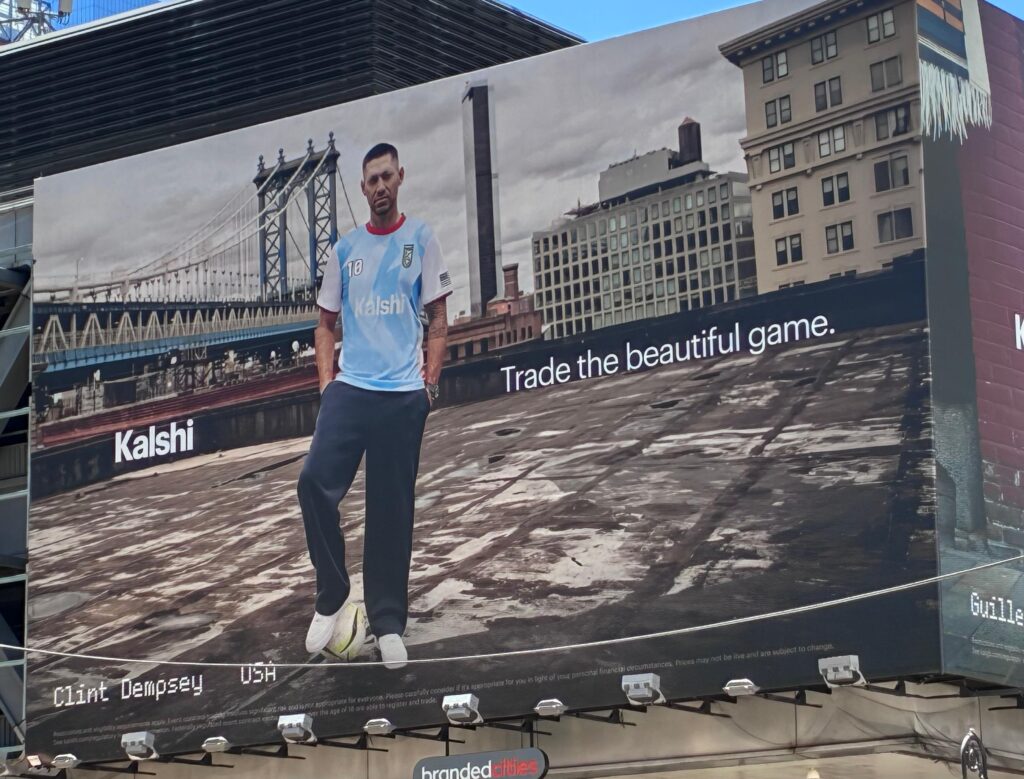
And then, perhaps most unsavoury of all, there is the White House and its ugly cruelties: the indefensible exclusion of Somali referee Omar Artan; the racial profiling and disgraceful treatment of the Senegalese and Uzbek teams; the exclusion of fans from nations like Senegal and Congo, and the sheer mean hearted spitefulness of the treatment of the Iranians, forced to decamp to Tijuana. ICE has left the World Cup cities alone, but outside of the football zone it is busier than ever. Fifa has barely even bothered to wring its hands over this. Infantino’s lickspittlery has known no bounds – offering succour to the absurd Gaza Board of Peace, wearing a MAGA cap, the Peace Prize of course, and the Oval Office selfies – but it has brought him next to no leverage at all.
It is some relief that Trump, himself, can’t quite get a handle on the tournament. He is, to be fair, otherwise occupied with two regional wars, one disastrously of his own making, and a state of permanent economic crisis and collapsing ratings. But it’s not a matter of time management, he just cannot bend football to his purposes. The Department of Homeland Security tried a little bit of aggressive nativism on the back of the USMNT’s group stage victories, posting on social media pictures of a very multi-ethnic squad many with recent migrant roots, and the slogans “Build the Wall” and “Protect the Homeland”, and looked like fools.
What good energy there was around the USMNT’s progress was dispelled by Trump himself, publicly boasting that he and the White House legal teams had protested the red card awarded to US forward Folarin Balogun in their round of 32 game against Bosnia. Fifa duly suspended his suspension allowing Balogun to play in the US defeat by Belgium. It was almost worth it to see the Belgians lampoon Trump’s dancing and issue a victory media post with the words “overturn this”. Almost, for given that the conspiracy is in plain sight it is disheartening that so many other fictive conspiracies have been conjured up. Despite the generally very good standard of refereeing, the ambiguities of VAR and, in many societies, a collapse of trust in public authorities, have turned poor decisions into robberies, and the luck of the draw into intentional strategy. Trump’s super power is to corrupt everything he touches with the same bottomless cynicism that consumes him, and we are all the poorer for it.
Yet we have also been captivated and entranced, and we do so because football, the World Cup, does not belong to these people, it belongs to us – the global football public and the players and in a thousand different ways we have been revelling in ourselves.
To my eye the levels of technical ability and fitness of the players, from top to bottom, is unparalleled at a World Cup, and though football’s global inequalities have made themselves more apparent with each passing round, there have have been few blow-outs and inspirational journeys from the margins to the centre. Cape Verde holding Spain to a draw, making the knock-out round, and frightening the life out of Argentina, crowned by an arcing joyful rainbow of a goal. The Democratic Republic of Congo, humiliated in 1974, returned to the World Cup, and now like Cape Verde staffed by its vast diaspora, exceeded expectations, and took a lead against England that required the very best from Harry Kane to win. Egypt, which has endured more than a decade of suffocation under the military, made it to the round of 16 for the first time, was allowed to breathe and scream and cheer and wail.
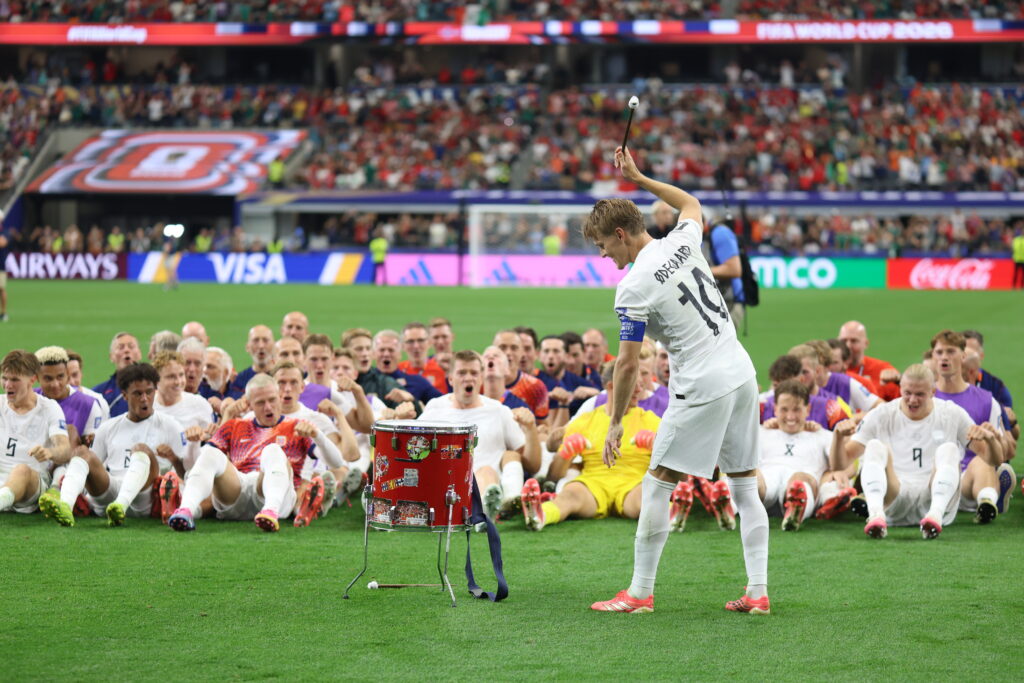
Richer nations, but on football’s peripheries, had their moments too. Canada, previously without a win at the World Cup, went to the round of 16 with a team that reflected a country transformed by migration. Norway’s run to the quarter final grew from the world’s most child-friendly joy-focused football culture, the world’s most democratic and accountable football federation and one of the best elite development programmes. All seem fused in the immense and glowing presence of Erling Haarland: goofy, funny, humble and approachable, but devastating and monstrous in motion or on the ball. He is surely the closest thing that football has ever had to a real life super hero; and it has been our joy to see him fly.
Scotland’s huge cavalcade of travelling fans brought their usual bacchanalian public charm but super sized it. Their appearance, en masse and in voice, at baseball games has been amongst the best crossover moments of the tournament. In the same vein who would have thought that the town of Lawrence in Kansas would fall in love with the visiting Algerians and vice versa. Mexicans in Tijuana adopted the exiled Iranian squad, and their crowds sang “Iranians are Mexicans. They are our brothers”. It is a shame that many South Africans’ treatment of African migrants back home has been so vile the rest of the continent abandoned known pan-African affiliations, and was united in its support for their opening opponents, Mexico. The cruel, vulgar streak in men’s football, and the crowd’s ruthless eye for weakness have delivered a whole song book of anti-trump invective. Crude but funny, there is something special about seeing the tables turned: “Aussie boys are on a bender/Donald Trump’s a Sex offender”, “He’s fat/With piles/He’s in the Epstein files”, and my personal favourite “He’s one of your own/He’s one of your won/Oh Jeffrey Epstein he’s one of your own”.
If the tournament were won on sheer energy, then Mexico would have been crowned champions some time ago. The volume and intensity of the games there have been unmatched north of the border. Their game against England was a raging, kinetic, magical drama on the pitch, as wild as anything played at a World Cup, but its energies were magnified a dozen times by the people at the Azteca; and by all accounts defeat was met without a trace of rancour. It is worth noting too that Mexico is flexible enough to accommodate mass protests and demonstrations alongside all this without reaching for the tear gas, manage without dynamic pricing, and put on a lot of community level art and football festivals. I think we all know where we would rather have spent this one.
Mexicans aside, the best atmosphere has been brought to the stadiums by North America’s diasporas. In Toronto, before their matches, many thousands of Canadian Bosnians and Canadian Iraqis flooded the streets – testament to what is now the world’s most diverse city. We have been graced and enlivened by the Congolese in Houston, the Haitians in New York, and in their different shades of yellow the Brazilians, Colombians and Ecuadorians who have settled in the US.
As with any great drama not everyone is a hero, and most stories don’t end well. The accusations of sexual misconduct hanging over Ghana’s Thomas Partey, Cape Verde’s Ryan Mendes and Morocco’s Achraf Hakimi are deeply troubling. Tunisia started so badly that they sacked their coach after one game and things did not get better. Uruguay’s short and painful stay was as downcast and miserable as the official photo of their lugubrious coach Marcelo Bielsa. South Korea’s campaign was simply acrimonious, their coach placed under police protection on his return and under attack by both the public and the nation’s President.
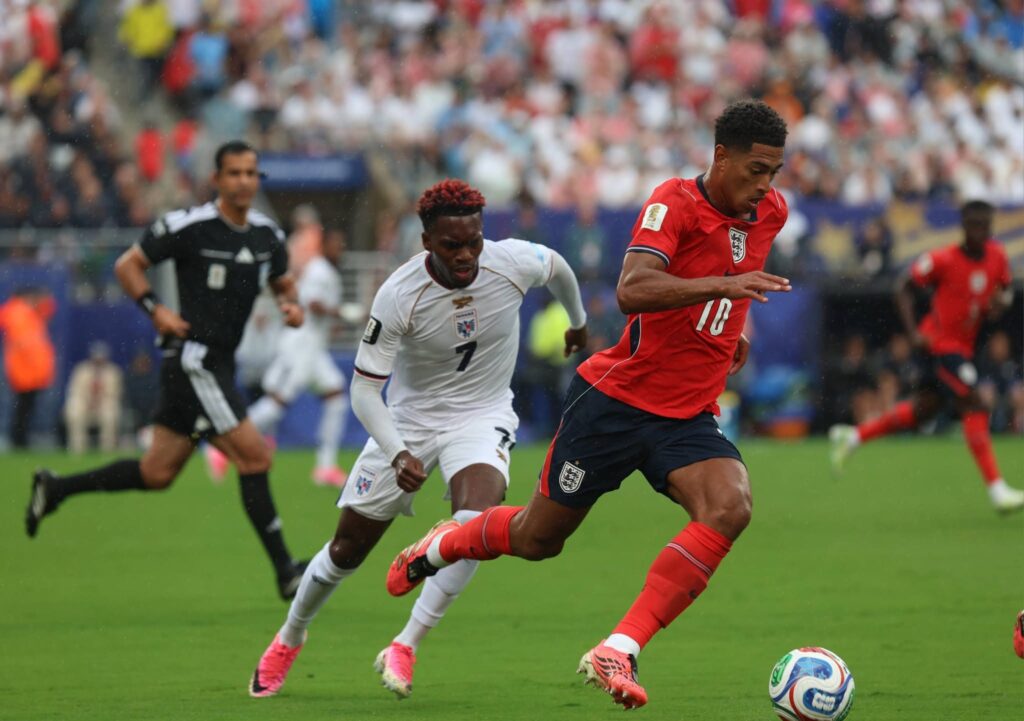
At the other end of the spectrum the World Cup has delivered four worthy semi finalists. The defending champions may be vulnerable but they have been tenacious, and they have Messi who unlike other elderly statesmen at this tournament retains the spark of genius. Spain, perhaps harder to warm to, have a technical and tactical sophistication that is precise and mesmeric, but for myself it is France and England that have my heart. England, ragged at times, clumsy even, seemingly staffed by the walking wounded, have come from behind, won with ten men and passed through the fire of extra time. Whatever happens I will love them, but they are in a position not just to make sporting history and all that years of hurt stuff – they can make real history, real social change. At a moment when English patriots like Tommy Robinson are taking money from Musk to network with Russian oligarchs, and Nigel Farage does the same with a crypto billionaire in Thailand, at a moment when the fascist and the racists have tried to monopolise the flag by aggressively flying it from lampposts as markers of exclusion and control, this team, the most diverse ever, is what and who patriots really are. This is England!
And France? Well, they have simply been magnificent. In more than one way this feels like France’s tournament. More than ninety players across half a dozen squads were born there, more than 60 from Paris alone. French grassroots football, the talent, grit and verve of its youth, and its state-supported elite training networks are all without parallel. They have the most exciting, elegant, intelligent front six of any team I have seen at a World Cup, and they can mix it too. As the Paraguayans found out, to our pleasure and their dismay, they may be multi-millionaires but this team knows the football of the banlieue and they are not to be messed with. So too the racists, like Paraguayan senator Celeste Amarilla and Spain’s ex-Prime Minister Mariano Rajoy who have been met by the French, above all by Kylian Mbappe, with the contempt that they deserve. These people make the world ugly, but when Michael Olise is in loose, balanced, dynamic motion, he makes it beautiful.
The final awaits. It will, no doubt, be watched by more people than have watched anything before until the next World Cup. We have chosen to make this game and this moment our shared global ritual, our universal liturgy. Gianni Infantino will oleaginously preside, Donald Trump will present the trophy. We will, perhaps, be spared his presence on the dais this time, but either way neither he nor Infantino nor Fifa will be honoured or celebrated. What legitimacy they ever had is surely smashed beyond repair. We, the global football public, and our game deserve better custodians than this. Every World Cup is meant to have a legacy, this one could be the moment when the process of reclaiming and reforming the governance of football begins.
Josimar regularly opens its columns to independent guest contributors who wish to comment on the most pressing issues in world football. These columns solely reflect the opinion of their authors. Their publication does not constitute an endorsement on Josimar’s behalf, but a way to encourage and promote debate within the football community.