
Saikou, a teenage migrant worker at the 2022 World Cup, reflects on his experience in Qatar and calls out Fifa’s leadership.
By Saikou
Growing up in the mid 2000s football had a big influence and impact on the lives of many young kids like me. Many of us aspired to be future football stars and to give a better life to our families. Regardless of the many events and occasions that happen worldwide none can match the impact, reach and level of dedication that a Fifa event commands. Not only because it brings people from around the world together, but also because it exposes them to other people from different cultures, all bound by the same love they share for the game.
My very first introduction to this prestigious event was the one hosted in Brazil in 2014. Even though I was very young and a devoted Cristiano Ronaldo fan, I could not help but feel sad for young Messi losing that final to Germany. We lived in a very small community in The Gambia and would gather wherever there was electricity in our village to watch football matches together. It was clear that the World Cup always provided chances for everyone, regardless of where they came from, whether in the form of showcasing your talent or the chance to work and be part of the prestigious event.
My first real experience working as a security guard for the Fifa World Cup in Qatar in 2022 was a turning point. What I went through showed me that what we had been sold for most of our lives was nothing but a mirage.
My family and I made the stark decision to sell off the only piece of land left by my late father to fund my recruitment fee, which was about 8,000 Qatari riyals ($2197), hoping that Fifa would have a little space for me to also be a part of it.
Upon arrival in Qatar, all of our passports were confiscated by our sponsor, and we were forced into daily construction jobs in return for a place to stay and something to eat. I was made to join other migrants who had also travelled to Qatar in search of opportunities, but we were now stranded working for people and companies that did not care for us.
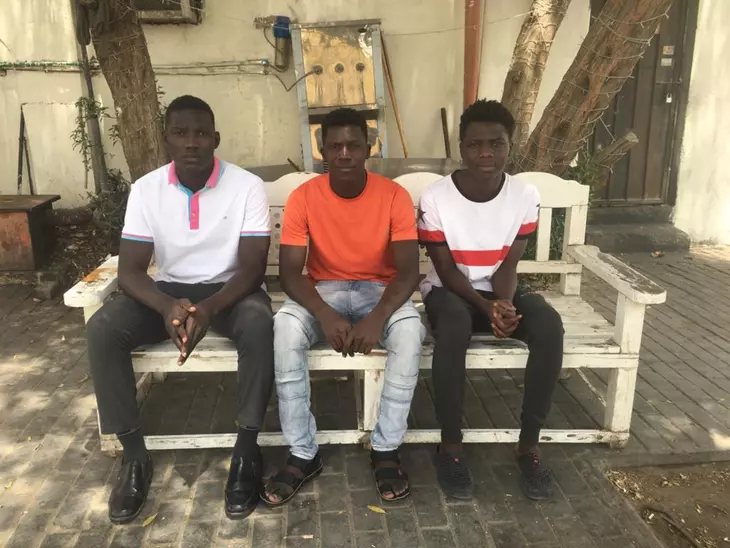
There, I met with two of my very close friends who also traveled from Gambia – Ebrima and Pap. They were also going through the same situation as me.
Before the start of the World Cup, we were working as construction helpers, building accommodation centers for the millions of visiting fans. We worked on road construction, accommodations and football centers, and other labour that was essential to making the World Cup happen. We were taken to work at Stadium 974, which hosted some of the very best matches, to help build and set up big tents just outside of the stadium. I was not alone.
We built roads. We moved concrete and steel. We did the labour that made the tournament possible. When the fans finally arrived cheering and waving their home flags, they only got to see the fruit of our very hard labour.
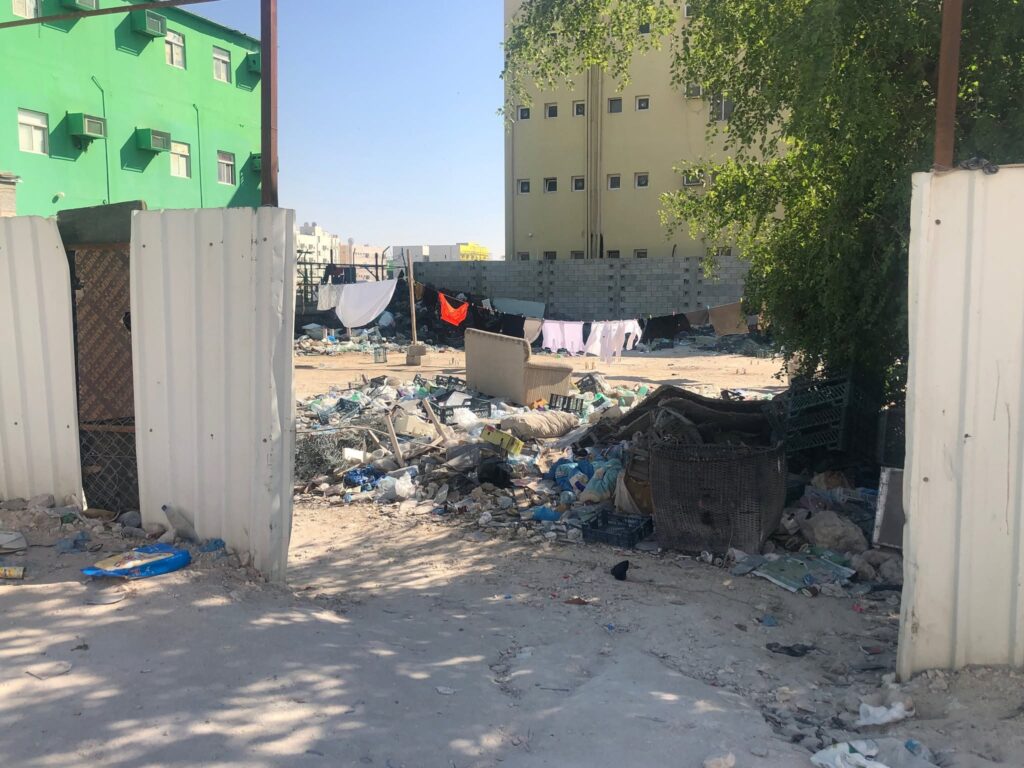
Being a native of Africa, where the weather is mostly cool with trees and green vegetation, working near historic levels of heat, it felt like the sun was directly over our heads. In one instance, I had to take a taxi back to our accommodation after feeling dizzy and nearly fainting while working under the extremely hot sun. I had not worked the entire twelve hour shift that day due to feeling sick and so I did not receive anything.
Working in the shadows of Qatari luxury, I met people who watched their colleagues die on the construction site. I spoke to colleagues who had near-death experiences or knew someone personally that had lost their lives and had to make the call back home to their colleagues and family delivering the painful news. I did not know it then but what I experienced was not bad luck. It was a system. Countless independent journalists risked their lives meeting with migrant workers just so they can bring justice to their cases and fight against the designed system that thrived on violating the rights of the less fortunate.
The only conclusion I could come to was that Fifa has an incompetent leadership that fails to take the basic steps necessary to end the endless suffering of their workers and that they are profiting from that suffering as well.
The Reboot FIFA campaign explained that on December 8, 2025 a complaint was filed with the Fifa ethics committee alleging that the president of Fifa, Gianni Infantino, violated Article 15 of the FIFA Code of Ethics through his public support of the US president. There are countless reports from credible sources all stating what is clearly obvious about the leadership of Fifa being more invested in the revenue they bring into their own pockets than acknowledging the countless violations their administration commits and finding ways to solve it.
The organisation needs total reform, just not by its own administration. With Saudi Arabia being awarded the 2034 World Cup, undermining all pleas and warnings from human rights groups, it is only clear that Fifa is incapable of listening to reason and is much more interested in the highest bidder.
A report from Human Rights Watch shows that of 130 people working in Saudi Arabia 128 had paid illegal recruitment fees ranging from $600 to $2,422. Most of these people had to sell their land and property just to afford the recruitment fee or take on massive loan and be in debt in hope of finding a better way of life for themselves and their families – only to have their passports confiscated and be forced to work at construction sites working long 12 hours shifts with just a single day off.
That same report stated that out of 112 workers who asked about their wages, 69 had their payments delayed and 71 said they faced non-payment or were paid less than the agreed salary amount. The kafala system is systematic in its continuous abuse of migrant workers. It is a system that keeps a foreign migrant worker from being able to change his employment to another job even when his original employer refuses to pay his salary. It forces workers to share crowded spaces with eight to thirteen people confined in a single room with all their belongings.
Leaving my family behind to travel to a foreign country was the hardest decision I ever made. When I was able to secure a security guard job at the media centre during the 2022 Qatar World Cup, I called back home to my family and promised them that everything was finally going well. We had always prayed while watching Fifa from childhood, growing up. Now that I was finally, in a way, part of it, I could not have felt prouder in my life.
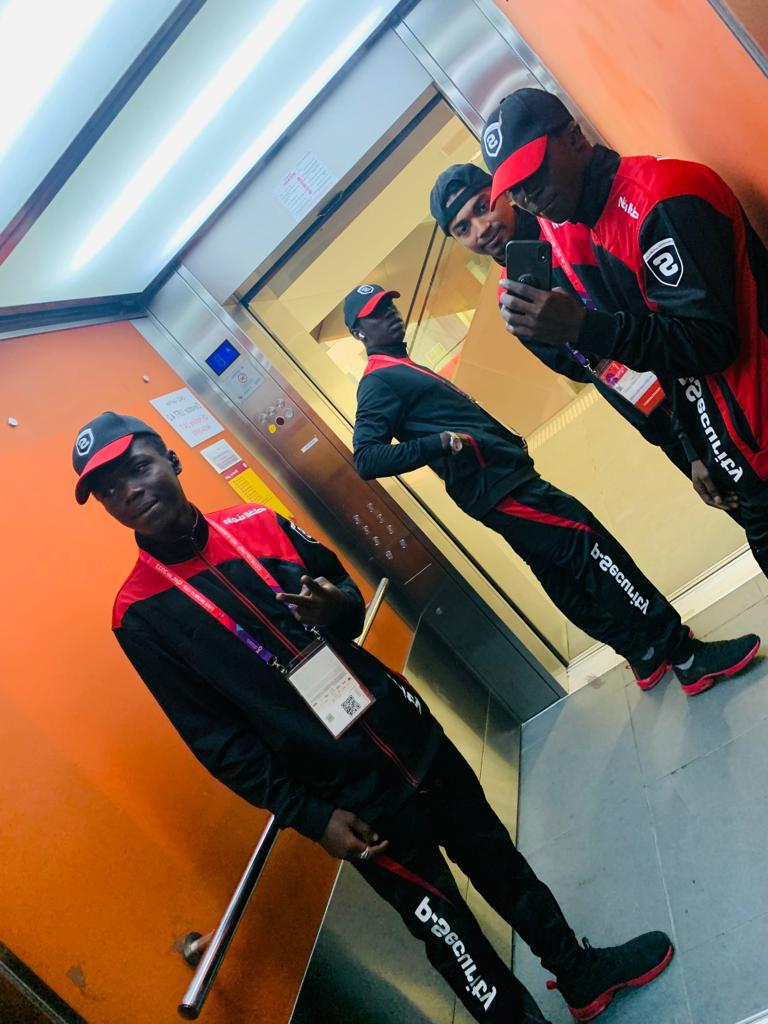
We signed a nine-month contract with a salary of 2,700 riyals ($741). We spent the first month learning basic safety measures and precautionary classes and were only given 600 riyals ($164). The second month came, and we were posted at the Qatar National Convention Centre. That month, I was paid the agreed amount. My family was really happy for me because I was the breadwinner. I made sure I kept a roof over their heads and that they never had to worry about going to bed on an empty stomach.
A few months into our contract, immediately after the World Cup, we were only offered half of our salary. They asked us to sign the pay slip paper in return. We organised and agreed to file a joint report to Fifa, since we had all been given a direct line to contact Fifa if we ever had issues about unpaid wages. We all called and filed our complaints. We even filed at the labour court in Doha. But Fifa never got back to us. Many of us were arrested in return for our defiance.
One of our colleagues, who was in his forties and mostly led and guided us in our complaints at the Qatar labour court, was targeted. The company agreed that about three hundred of us who had been unjustly let go should come to the city center to meet with the owner so we could resolve the matter. Upon arrival, they were all arrested and taken to jail before later being deported back home. The rest of us – those who could not afford the transport fee to join our colleagues – were left stranded and evicted with nowhere else to go.
With nowhere else to go, my two friends and I had to resort to finding our fellow Gambian brothers who had come together and rented a single room where ten shared. Feeling betrayed and having nowhere to run to plead and seek justice, we had to rely on a friend we met along the way named Sam, who worked as an independent journalist.
He was able to get us registered at a shelter at a better place to stay while we waited for our ongoing case against Fifa at the Qatari labour court. We spent a whole year and six months at this shelter. We were not allowed to go out without supervision. There was constant surveillance over us and monitoring of the people we talked to.
We met Lise Klaveness, the president of the Norwegian Football Federation, and pleaded our case, hoping Fifa and the Qatari court might finally see reason and understand the suffering they caused so many of us. After a whole year had passed, all our cases kept being withdrawn without our knowledge. They told us they could not find anywhere in their system the name of the Stark security company, our employer, we had given them.
Instead, they filed a new complaint against our original sponsors. Having gone through all of this at the age of 16 with my two brothers, who were 17 and 18 and being kept in such a confined space where we were watched over continuously, was mentally draining. It left lasting effects we still deal with to this very day.
After a year and a half at the shelter traveling to and from court whenever they called for my presence, I was able to convince the judge to rule in my favour providing him my contract and all that they’ve done to us. They accused my employer of accepting recruitment fees and ordered him to compensate me. But nothing was ever said about working for Fifa and being refused payment while working for the World Cup despite showing the contract we signed with Fifa and also the accreditation card given to us working at the media center.
After being away from my family for over two whole years I finally had a small gift I could bring back home to my family. Something to help with all the loans and debt they had taken on for my sake. My friend Pap, who was just two years older than me, agreed that we would come back home and invest in what we had and help support our families. Reuniting with my family after all that time I was filled with emotions. I was extremely happy to hold my family again.
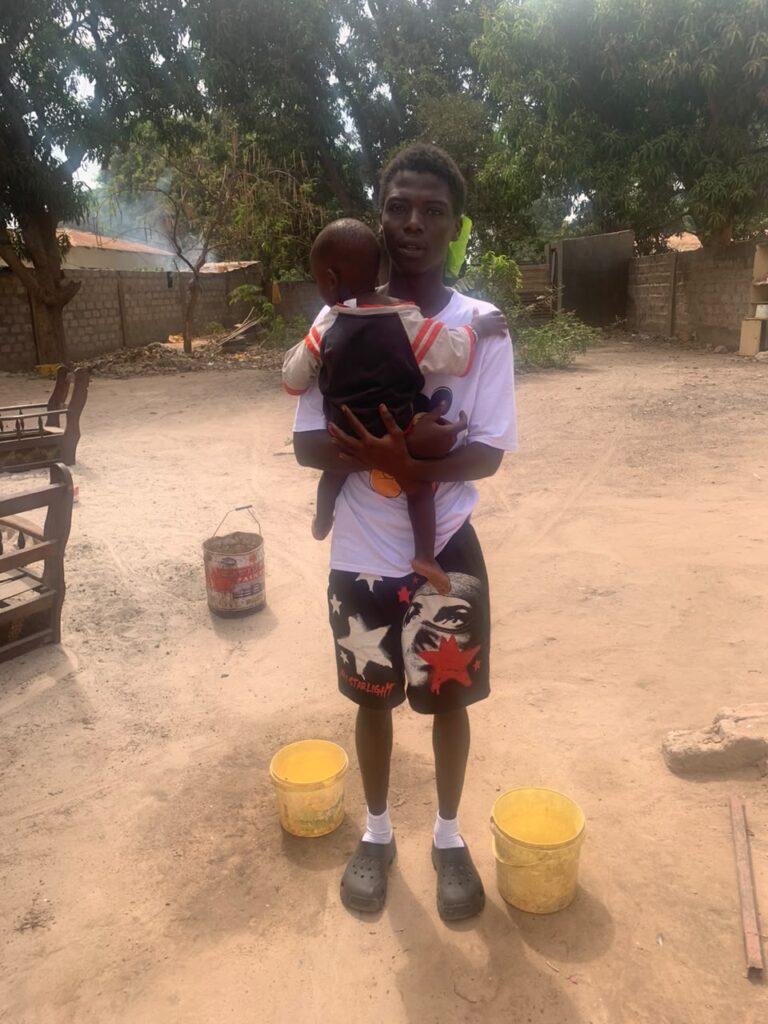
I only wish I could say the same for my friend Pap. After returning back home, he has truly never been the same. He started slipping slowly into conversations with himself arguing about his sponsor not giving him anything to eat. He would claim to see things that nobody else did and spoke of people coming out to get him. His stepfather took care of him during this time, always making sure he took his medication and keeping him safe from injuring himself.
Then one day, Pap struck his stepfather with a shovel before running into the forest late at night injuring himself in the process. By the time the public and police got to him, he had suffered serious cuts from running into a thick corrugated door. He was taken to prison where he is still being held.
Right now, he is in a much more stable state of mind, but mental health is often overlooked among migrant workers. Each day that passes, you just lose a tiny bit of yourself both physically and mentally. The mental toll is left on everyone, even though I smile and pretend as though things are alright. It still haunts me to this day.
Pap is the most loving person you could wish for. In Qatar, he took on the role of being responsible for me even though he did not need to. He is the type of person to make sure everyone is well fed and taken care of even if it comes at the expense of his own comfort and resources – even at a time or a place where most would only think of themselves.
Now, he is dealing with mental health trauma that could leave him spending the rest of his life locked behind doors in a country that has basically no regard for mental health. He knows the depth of pain his actions caused and that knowledge only adds more weight to his already troubled mind. He was the breadwinner of his family. Losing him has greatly affected their situation, making it even worse than it already was.
Then there is Ebrima, my other friend, who was just a year older than me. Upon returning back home and paying most of the debt his family had taken, he decided to risk his life by embarking on that dangerous migration to Europe, the same journey where a few of my friends also lost their lives.
Josimar regularly opens its columns to independent guest contributors who wish to comment on the most pressing issues in world football. These columns solely reflect the opinion of their authors. Their publication does not constitute an endorsement on Josimar’s behalf, but a way to encourage and promote debate within the football community.