
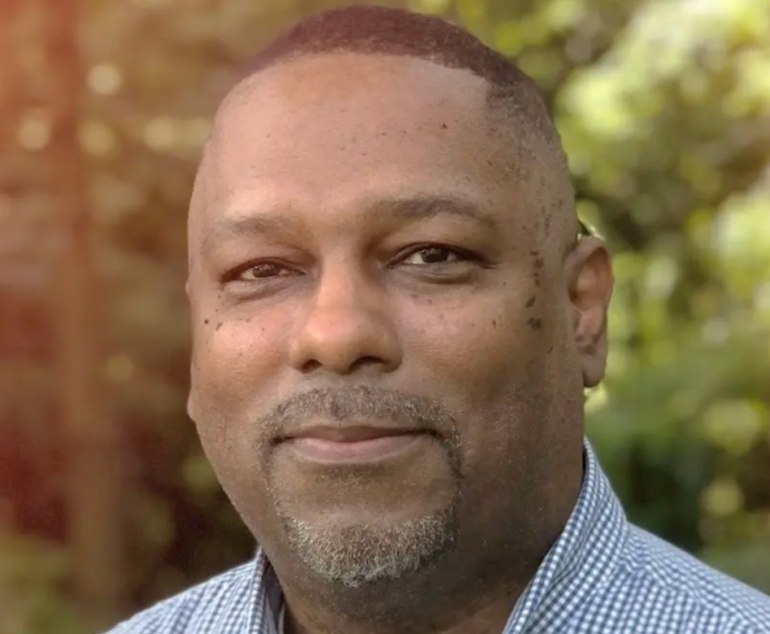
Mel Brennan witnessed firsthand how those entrusted with the world’s game betrayed it, leaving him to wonder: what is football really for?
Brennan is the author of Fixing Football, which has just been published by Fair Play publishing. The head of special projects for Concacaf (2001-2003) and one of five North American delegates to the 2002 Fifa World Cup, he remains the highest-ranked African-American in the history of world football governance. Brennan holds a PhD from the University of Stirling, and is co-author of Sport, Revolution and the Beijing Olympics (2008) with Grant Jarvie and Tony Hwang.
“Son, people often say that ‘a journey of a thousand miles begins with a single step,’ and those people are dead wrong. All journeys must begin with first facing in the right direction. Otherwise you might set off on your journey in precisely the wrong way…” My father, Melvin Brennan Jr., circa 1988.
Why write a book about fixing football? Does football need fixing? Does soccer need saving? Why you, Mel? And who reads books anymore anyway?
When I think about soccer, I often feel good, but not, you know, all the way good. We all see it: there’s always some messiness throughout the sport – some scandal or some horror or hatred or manipulative greed – to stuff down, to accommodate on the way to any good feelings about what we see on the pitch.
And when I think of my time in the weird space-ecosystem that is the secret world of football governance, what was important then, and remains important today, are two things. One, people should know what happens here, with the resources their commitment to football generates. And two, football’s ability to move the world is long, and life can be short, so thinking through what to do with such power – and involving as many people in those decisions as possible – matters.
So in the context of my dad’s quote, above, I wrote this book as orientation, as a journey, not mainly as an endpoint or destination. This is about us, at least, facing the right way.
When you watch a football match, in the stands or on a device, massive global corporations bet on the attention your eyeballs give to watching, say, PSG; they bet that that attention can also be garnered for Qatar Airways. Or for BET365. Or any number of endeavours looking to the masses for engagement and sales. Those sales generate billions upon billions in revenue, a portion of which those companies then bring back to entities like Concacaf, Uefa and Fifa in the form of multi-year sponsorships.
What, precisely, does Fifa do with that money? It was a question inside a puzzle inside a heist when I worked there. It doesn’t seem any better today. More ostensible processes today, yes; more paperwork. But the Fifa Forward Programme does the same political work, in my estimation, as did the Fifa Goal Programme. And everyday people aren’t feeling the benefits of the offerings from these governing bodies, who themselves glean the benefits of being, laughably, non-profit entities, in terms of the full distribution of the dollars our football passion generates. Importantly, neither do the most vulnerable.
My own football story as Head of Special Projects for Concacaf, as the North American liaison for the e-Fifa referee development initiative and as a delegate to the 2002 Fifa World Cup Korea/Japan was so traumatizing, so life-changing, that I spent the next nearly thirty years in the C-Suite of the most impactful charities in the world almost frantically trying to ensure that resources got to the most vulnerable…for me, what happened – what appears to still be happening – in world football simply could not be allowed to happen with things like food, or home energy (an inability to pay one’s heating bill is the 2nd leading cause of homelessness and family separation in the region where I live), or with youth development, or with the rights of prisoners in places of despair like Rikers Island.
So I went into these endeavors with Jack Warner and Chuck Blazer in the back of my mind, and with a “never again” mentality at the forefront of it. And, properly oriented as my dad would expect, I was lucky enough to befriend real investigators like Andrew Jennings and Lasana Liburd along the way. Resultantly, we saw in 2015 that the sunlight sends various cockroaches sprinting for the corners. But the question that emerged was “if you fundamentally change the players (football officials and leaders), but not the game (football governance transparency, rules, and power distribution models), what, if anything, would really change?”
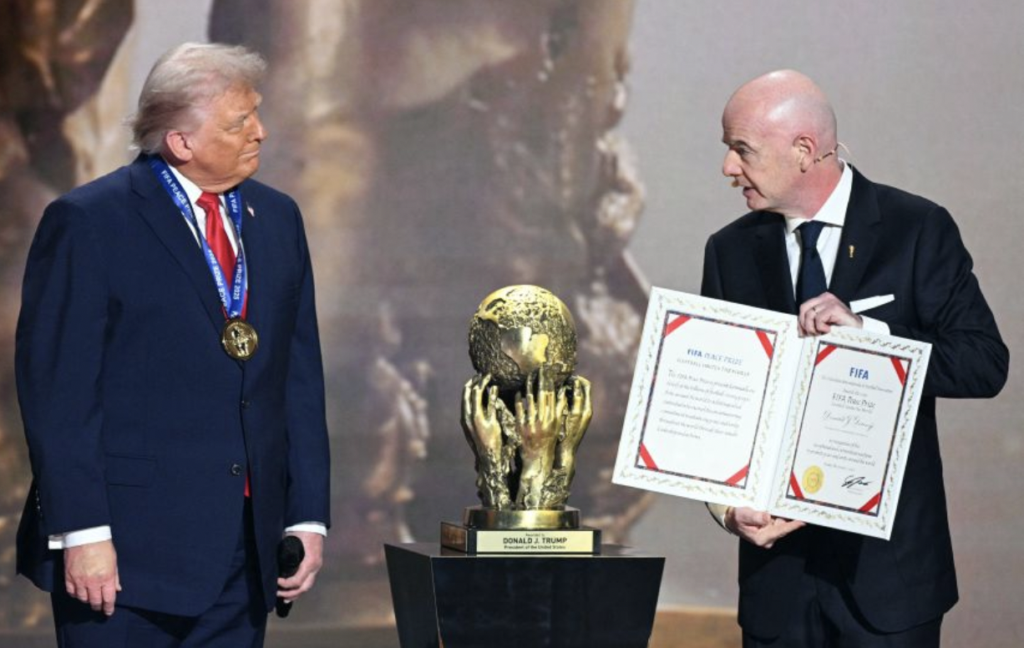
These days, watching Gianni Infantino hand Donald Trump a “Fifa Peace Prize,” the answer is “not enough,” and a new, more fundamental, more orienting question has to be asked: What is football – what is sport – really for? Is it for glad-handing men of wealth to use men of ambition and the sporting activity we’ve come to love to bring sycophantic middle managers into their orbit and deploy all the apparatus to garner even more wealth, power, and influence? Is it simply that we are meaty vehicles that serve as highways for resources to run from our small wallet, in aggregate, to the coffers of mega-corporations?
Or is it – can it be – something more?
When African nations deployed their power, influence and vote to move Fifa in the direction of standing against the murderous hatefulness of South African apartheid, did football become more than football?
When we saw the Europe-wide campaign launched in 2005 by Thierry Henry called STAND UP SPEAK UP do what Fifa never could, and create a cultural context, everywhere, to say no to racism and colourism, was football bigger than the game?
When those who fought the Nigerian Civil War (also known as the Nigeria-Biafra War), a war where as many as 100,000 combatants were killed and as many as 3 million Biafran civilians died by starvation stopped fighting for 48 hours (for any number of potential political and propaganda ends, yes, but stopped fighting nonetheless) so soldiers and fans from both sides could safely watch Pelé and Santos play, did football have an outsized impact on lives?
Or when a small book my dad put on our bookshelf at home told me the story of Haitian-American Joseph Edouard “Joe” Gaetjens, and his goal of legend, and the horror of the Tonton Macoutes (the Haitian paramilitary and secret police force created in 1959 by dictator François “Papa Doc” Duvalier that allegedly disappeared – and probably killed – Gaetjens for staying in the island nation when his family – political enemies of the regime – fled), did football become cultural context for life? For death? For fighting for what was right, or moral, or just, even at threat of one’s own existence? How many times has football played backdrop, or center stage, to the changes going on – or needing to go on – in the world? What is football – what is sport – really for?
My book tells stories of what Paul Gardner would call “sublime and sordid things” to ready readers for a larger point; one bigger than me, than you, and, like those above examples, potentially bigger than all of us: that sport in general, and football in particular, is the Archimedean lever of our modern age; if we stand in the right place – or just stand upright at the right time – we can move the world.
When we think of things as replete with the democratic, we think of them being imbued with the interests, hopes, concerns, expectations and aspirations of most of us, most of the time…while in every instance, keeping track of the humanity of the most vulnerable? When was the last time you heard Infantino talk about who is made or kept vulnerable by how he imagines football? Or the leaders at Uefa? Concacaf? The Premier League? Major League Soccer? The U.S. Soccer Federation? Not often. Too often, never.
That’s why this book exists. To give voice to those without a voice, and to remind most of us – who together, make this whole sport thing matter – to use our voices for more than just shouting for our favorite clubs. To uplift the work of sport, of football, to places that make life better for everyone. If I did a hundredth of that work in this book, it’ll be a success. Because in the end, people still read books. People still care about each other. And people still want to feel good – all the way good – about their sport.
Josimar regularly opens its columns to independent guest contributors who wish to comment on the most pressing issues in world football. These columns solely reflect the opinion of their authors. Their publication does not constitute an endorsement on Josimar’s behalf, but a way to encourage and promote debate within the football community.