
The owners of Como 1907, the billionaire Hartono family, own a stake in a downstream smelting plant of Harita Nickel, one of Indonesia’s most controversial mining operations.
By Sam Kunti. Additional reporting by Aqwam Hanifan.
Como 1907 are the new sensation in the Champions League. On Wednesday, they defeated Lens 9-1. Spearheaded by Anastasios Douvikas, Como’s victory was the latest achievement in the club’s steady but improbable rise – from the lower tiers of Italian football to the Serie A and Europe’s elite.
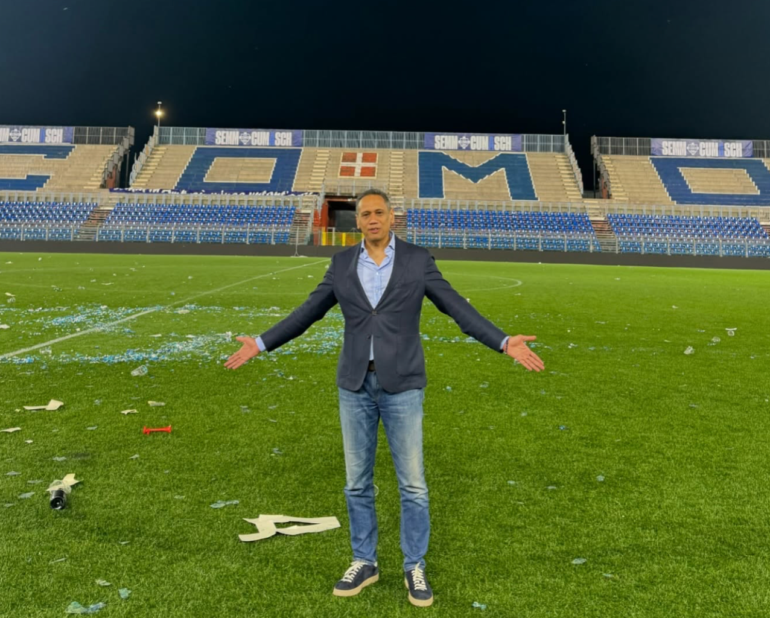
A fortnight ago, the Italian club dismantled Manchester United, once a European powerhouse, now ‘a horror show in the post-Ferguson age’, with a 4-1 thrashing. Sitting next to UEFA’s deputy general secretary Giorgio Marchetti in the stands, Como’s president Mirwan Suwarso witnessed his club’s landmark win. A former TV executive, Suwarso has served as the club’s public face since the Indonesian conglomerate Djarum Group took control of Como in 2019. Last week, Djarum’s offices in Central Java were raided in a corruption probe.
Reverse engineering
On the eve of last season’s Champions League final at a football summit in Budapest, Suwarso recounted the genesis story of the acquisition, admitting that it had been “a mistake” – the club was to be a vehicle to produce documentaries and promote Indonesian players in Europe, following a similar project in Birmingham. No due diligence, he said, had been done.
Suwarso explained: “We had academy boys playing against UK academies, and the TV ratings were higher than the Premier League at the time. We just lost the Italian TV outright. So I thought, let’s double down on this, let’s buy a club in Italy and try to put some more players there. Broadcast it. At least, I have consistent programming only to find out that’s not allowed. After I purchased it, I think with zero due diligence, I just kind of like hanging out in Milan. So I bought the club closest to Milan.”
A few months after the 2019 takeover, Como 1907 won promotion from the Serie D – the amateur level – and began to climb the league pyramid. Suwarso chose to ‘hide from the owners that they owned a football club’. He used Como 1907 as a “content play” for a documentary ‘The American.’
Suwarso continued: “I put an American CEO [Michael Gandler] in charge of the club, and I told him to make all the wrong decisions. For example, hire the sports director who has no experience, hire the most bizarre player that you can find. We hired a guy who just got out of jail for robbing [Ismail H’Maidat]. He was involved in a bank robbery [H’Maidat was subsequently acquitted]. It was great storytelling. The team kept winning. The sports director still stays with us. We got promoted to Serie B, and then I had to tell the owners.”
Suwarso and Como adopted a data-driven model, “inspired by the film Moneyball”. In May 2024, they hired Barend Verkerk, a data analyst, from Dutch club AZ Alkmaar. A few months later, Cesc Fabregas became the manager.
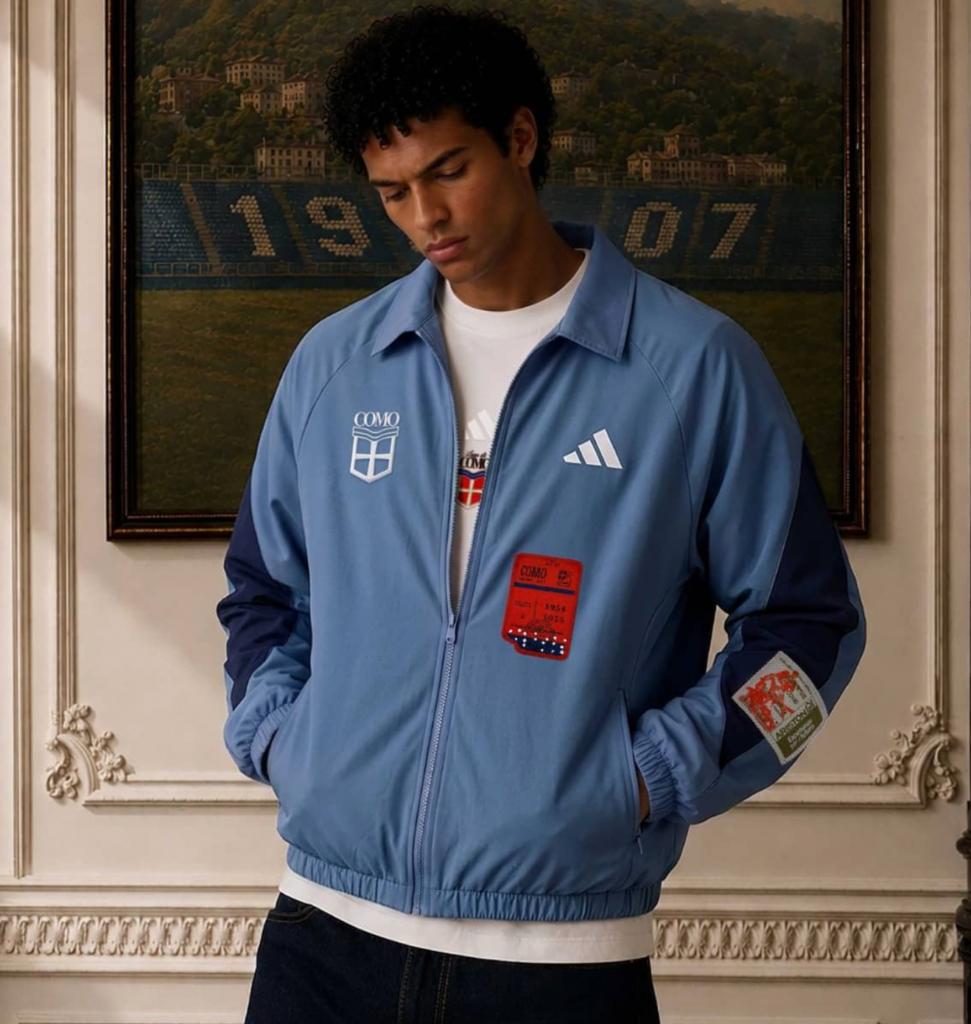
Suwarso’s vocabulary is steeped in corporate jargon: branding, storytelling, startup, growing, and data. Como launched a fashion brand and opened an exclusive members club in a lakeside villa. As he explained bluntly: “I’m Indonesian, so I am an expert in reverse engineering, trying to copy everything that people have done and trying to make it cheaper and better.”
Ultimately, Suwarso answers to the Djarum group, the conglomerate controlled by the Hartono family. Brothers Robert Budi Hartono and Michael Bambang Hartono – last March, Bambang died – are listed among the wealthiest and most powerful tycoons in Indonesia.
The deadly Kretek community
In 1951, their father Oei Wie Gwan, of Chinese heritage, laid the foundations of the family wealth when he acquired a failing cigarette company and renamed it Djarum. He focused on selling clove cigarettes (kretek) in West Java. His marketing was unorthodox: empty cigarette packs served as entry fees for film screenings, according to Marin Welker’s book ‘Kretek Kapitalism.’
Budi and Bambang took the reins after their father’s death, modernising and launching different cigarette brands like Djarum Super. They became one of the dominant producers of clove cigarettes and aggressively built an export market, going so far as to modify their products to circumvent a 2009 US federal law.
Congress had introduced the Family Smoking Prevention and Tobacco Control Act. Section 907 which outlawed cigarettes with “characterizing flavours”, including clove. In response, Djarum and its US distributor, Kretek International, pivoted by reclassifying its clove products as cigars. To skirt regulation, they introduced “Djarum Black Filtered Cigars”, changing the wrapper and the tobacco density.
In 2021, the US government fined PT Bukit Muria Jaya, owned by Budi and Bambang, 1,5 million for conspiring to commit bank fraud in connection with the export of cigarette paper to North Korea.
On its website, Djarum traces the birth of clove cigarettes to Kudus, Central Java: “In 1880, a local resident named Haji Jamhari first discovered the kretek cigarette, which is a combination of cloves and tobacco that grows in this area. He mixed the kretek cigarette to relieve the pain in his chest. The story goes that Haji Jamhari suffered from asthma and often applied clove oil on his chest for relief. He also experimented by adding cloves to his cigarette with the hope that his lungs could improve by inhaling the smoke. In the end, Haji Jamhari recovered.”
In 2025, Indonesia – not a party to WHO Framework Convention on Tobacco Control – recorded 268,614 tobacco-related deaths, according to the Global Tobacco Index. Yet, ‘kretek nationalists’ continue to celebrate clove cigarettes as a symbol of national identity. The ‘Kommunitas Kretek’ mission reads: “A cool community that celebrates kretek as an Indonesian cultural heritage. Upholding the nation’s independence also against foreign threats to local commodities.”
Opposed to stricter tobacco laws, the community promotes and reviews Djarum cigarettes. A recent ‘story’, inviting readers to rethink accepted health norms, headlined that a “Global capitalist trick review reveals anti-smoking campaign conspiracy.” A Junearticle highlighted how restrictive tobacco laws could cost the state 700 trillion rupiah (34,4 billion euro).
The Kommunitas Kretek is linked to Djarum through contributor Puthut EA, who founded Mojok.co, a media platform that covers Indonesia from the perspective of ordinary citizens. The platform is backed by GDP Venture, Djarum’s venture capital arm founded by Martin Hartono, son of Budi.
BCA
The Hartono brothers’ wealth skyrocketed following their acquisition of Bank Central Asia (Asia). In the 1990s, amid the Asian Financial Crisis, Indonesia’s economy suffered a downturn and a currency collapse. In response, the government nationalized BCA, the country’s largest private bank, which had been controlled by the Salim family, a dynasty with close ties to the former authoritarian President Suharto.
Between 2002 and 2003, the Hartono brothers quietly bought a controlling stake in BCA from the government recovery agency. They cleaned up BCA’s operations, transformed it into Indonesia’s premier digital and commercial bank, and held on as its market valuation skyrocketed past $60 billion.
From e-commerce to real estate and media, the Djarum Group steadily diversified. In 2025, Forbes estimated Budi and Bambang’s combined wealth at almost $44 billion.
BCA has often played a central role in the Hartonos’ wealth creation. The bank sought to provide over $65 million in aggregate debt financing to PT Halmahera Persada Lygend (HPL) for the construction of mineral processing facilities on Obi Island where the Harita Nickel Project, a major mining and processing complex, extracts and refines battery-grade nickel for the global electric vehicle industry. In other financing, Djarum Group’s holding company PT Dwimuria Investama Andalan agreed to provide $80 million in debt financing to PT Trimegah Bangun Persada, a subsidiary of PT Halmarhera Persada Lygend, in which Harita Nickel holds a 45,1% stake.
At the end of last month, OCCRP reported that the Harita Group approved hundreds of thousands of dollars in “incentives” for community leaders, flights for politicians, and financial support for military projects between 2013 and 2023.
Obi Island
The Hartonos hold a 23% stake in PT Halmahera Jaya Feronikel (HJF), a core downstream smelting company within the Harita Nickel project. The corporate paper trail runs through PT Obira Mitra Jaya to PT Sarana Cipta Multiniaga to two companies that are directly tied to Robert Budi Hartono and family – PT Sapta Prima Persada and PT Lingkarmulia Indah.
A crucial component in lithium batteries, nickel is of great importance to the electric vehicle industry. Indonesia produces over 50 percent of the world’s nickel, with Harita Nickel, one of four behemoths in the local industry, producing a few percent of the global supply.
In 2010, Harita Nickel began mining operations through its subsidiary and operational arm PT Trimegah Bangun Persada on Obi Island in northeastern Indonesia. The village of Kawasi, situated on the waterfront, has borne the brunt of expanded activities, including nickel smelting.
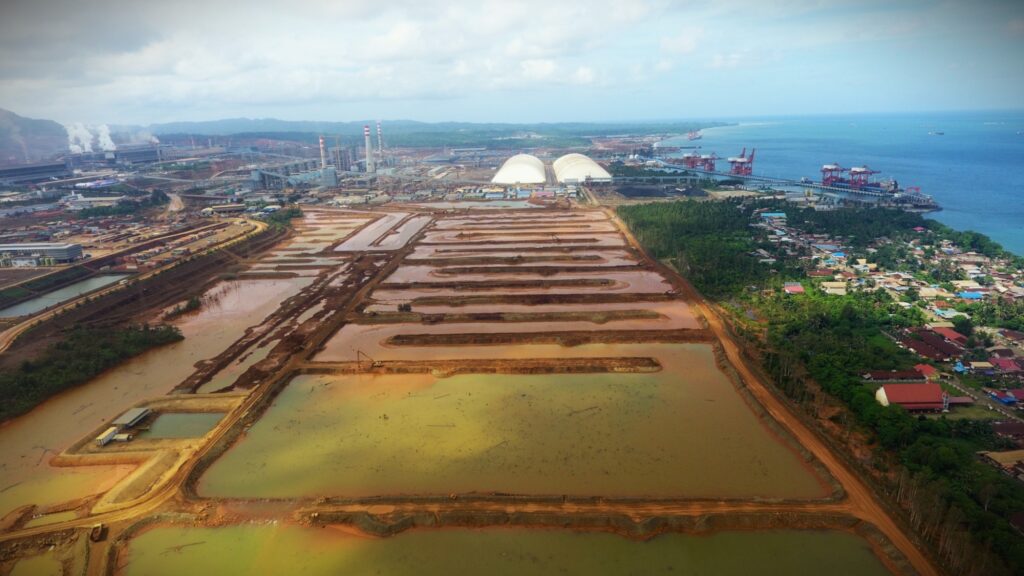
Mining activities have consumed the surrounding forest. The mining giant has subjected the population of Obi Island, and Kawasi in particular, to systematic pollution. Leaked internal documents showed that management knew since 2012 that operations were contaminating drinking water with chromium 6 – a toxic carcinogen – at levels exceeding both WHO guidelines and Indonesian legal limits.
Tonny Gultom, Harita’s director of Health, Safety and Environment, knew the pollution, a recurring problem, stemmed from the mining and factory runoff. Indonesian regulations limit chromium 6 in drinking water to 0,01 mg/l. Gultom became concerned, but Harita Nickel did not warn local villagers. Gultom, corporate records show, retains his position as a director in PT Obira Mitra Jaya, downstream from the aforementioned PT Halmahera Jaya Feronikel.
In 2023, Harita Nickel went public, raising $660 million. Clifford Chance, the magic circle law firm that faced severe criticism from NGOs for conducting Saudi Arabia’s flawed 2034 World Cup human rights assessment, served as an advisor on the IPO, underwritten by BNP Paribas, Citigroup, Credit Suisse and Mandiri Sekuritas.
At the time, Clifford Chance’s lead partner Gareth Deiner remarked: “Indonesia has the world’s largest nickel reserves, which is a critical input for the electric vehicle and battery industry. The quality of the investor base for this IPO – particularly against the backdrop of challenging market conditions – demonstrates the strength of investor confidence in Indonesia’s ambitions to develop an end-to-end EV supply chain.”
Did they mislead investors and the public? Clifford Chance didn’t reply to Josimar’s request for comment.
Harita Nickel’s presence on Obi Island remains troublesome. Last year’s Corporate Responsibility Initiative (CRI) reported complaints by Kawasi residents of escalating land disputes, water contamination, collapsing fisheries and farms, unwanted and unviable relocation, and unequal access to public services. In August, NGO Walhi also reported that seawater had turned green and dead fish were washing ashore on neighbouring Bisla Island, a disruption linked directly to heavy barge traffic and industrial waste.
“What is happening in Kawasi is not just an energy transition,” Ahmad Rumasukun, an environmental lawyer and a representative of the North Maluku Environmental Lawyers Coalition (KAPAL) , told Josimar. “The waste, dust, sea siltation, and clean water crisis due to smelter activities are dirty energy practices that are extractive and exploitative, wrapped in the label of “downstreaming for EV batteries”.
Last May, Kawasi villagers demanded justice for severe floodings they alleged were caused by Harita Nickel’s operations. Faizal Ratuela, Walhi’s national executive anti-Mining and energy campaigner, stressed that the systemic failure of corporate environmental governance and weak state supervision are at the root of this crisis.
Despite these issues, Harita Nickel has been issued with sustainability certificates. PT Trimegah Bangun Persada and PT Halmahera Jaya Feronikel received ISO 14001 certifications – “an international standard for environmental management systems, ensuring companies manage their operational impacts responsibly” – in 2023 and 2024 respectively. Ratuela dismissed those as nothing more than “a cosmetic to beautify destructive operations.”
Rumasukun added: “We refuse the displacement of Kawasi residents from their village in the name of development. We also refuse relocation in the name of progress and safety from an industry that itself damages the environment.”
In July, representatives from Walhi and journalists said they were subjected to intimidation, surveillance, and systematic efforts to block access to Kawasi village.
At the end of the summer, villagers and fishermen protested against Harita Nickel’s activities. “The seashore is our living space, a place to find food, a place to work, a space for social interaction, and the future of our children.” said Aswat Ibrahim, a Kawasi village fisherman.
Ahmad Ibrahim, another local resident, added: “We are tired of hearing the narrative of high economic growth while our quality of life is getting lower. We need a real distribution of justice, not just a gimmick on the social media homepage.”
The mining operations on Obi Island are not an isolated case. In East Sumba, another Hartono-owned company PT Muria Sumba Manis (MSM) has been accused of acquiring thousands of hectares of indigenous land through evictions and breaching labour laws.
The Hartonos are majority stakeholders with 75 percent in MSM through PT Muria Manis Nusantara, which is owned in turn by PT Hartono Plantation Indonesia. This entity is held by a web of additional Hartono family companies: PT Tricipta Mandhala Gumilang, PT Caturguwiratna Sumapala, and the aforementioned PT Lingkarmulia Indah.
According to academic research, MSN exploited the traditional indigenous practice of wang sirih pinang – the exchange of betel nut money – to acquire land, framing the symbolic gesture as formal consent and adequate compensation.
In July 2025, UN Special Rapporteur Albert K. Barume shed international light on the long-standing land dispute during an informal visit to East Sumba where the Umalulu Indigenous Peoples claim to be the victim of a massive corporate land grab for sugarcane cultivation and industrial infrastructure.
Milk Cows
The Hartonos are not the first Indonesians to invest in Italian football. In 2013, Erick Thohir, with interests in mining and real estate – alongside Rosan Roeslani, Handy Soetedjo – acquired a majority stake in Inter Milan for a reported 250 million euro. Massimo Moratti, largest shareholder and former CEO of Italy’s largest oil refinery Saras, could no longer sustain the club after year-on-year losses.
Thohir and International Sports Capital led Inter in a conservative fashion to restore the balance sheet before, three years later, selling it to China’s Suning Holdings Group. Suning took on 230 million euros of debt and a 100 million euro loan from Thohir. The Chinese paid 280 million euros for a majority stake as part of an overall 750 million euro deal. In 2018, Italy’s Guardia di Finanza probed the origins of Thohir’s investment in Inter Milan, though the investigation ultimately yielded little.
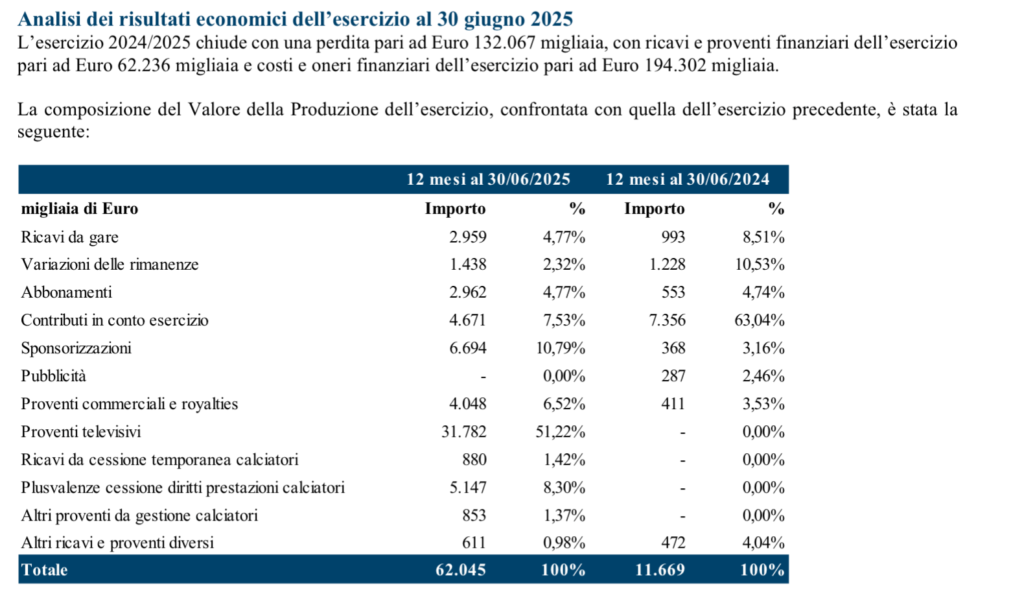
The Djarum Group has overseen escalating operating losses to establish Como in the Serie A. The 2023-24 season in Serie B, resulted in a €49.5 million net loss for the 1907 Como Group. The following season, in Serie A, losses reached €132 million. Sent Entertainment Limited twice covered the losses. The Italian sports Gazzetta Dello Sport daily projects a loss of €100 million for the 2025-26 season.
Suwarso, however, has a simple solution: selling players. The Hartonos are also in the dairy business, and to the owners, Como’s president explained: “The football players are your cows. They’re cows. You can measure them. This is how they grow. These are the metrics that we need. And all of a sudden, they [the owners] became engaged, so we could sell the cows. Do we get milk from it? Yes.”
This summer, Como 1907 sold players for a cumulative transfer fee of 20.45 million euros, a sharp contrast with the about 64 million euros spent on players, including 30 million euros for Chelsea’s Trevoh Chalobah. Suwarso and his club will have to sell many cows to stem their financial losses.
The Djarum Group, Harita Nickel and Clifford Chance didn’t respond to Josimar’s questions.