
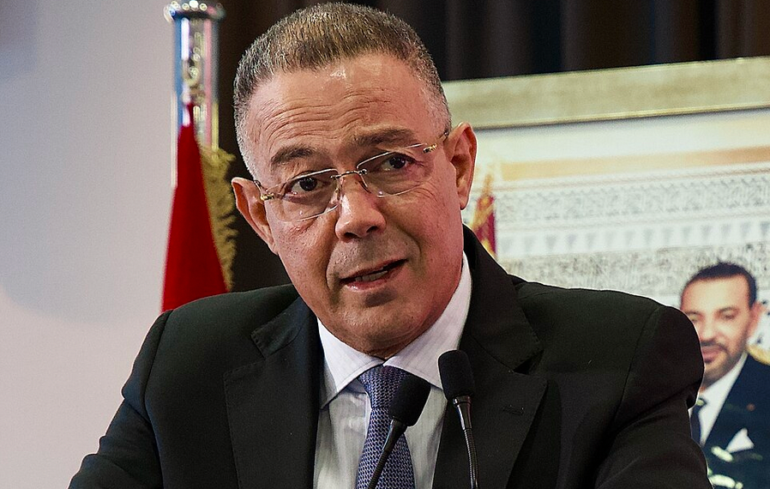
A Fifa council member, the man behind Morocco’s ascendancy in world football and arguably the ultimate powerbroker in African football, Fouzi Lekjaa has made a shift in domestic politics. Is this a first step toward the prime minister’s office?
By Pål Ødegård
It’s the afternoon of 13 June in Moscow, a day before the curtain raiser of the 2018 Fifa World Cup in Russia, and Fouzi Lekjaa sits down at a terrace bar. Despite the heat and the sun, he orders a coffee, puts his document folder aside, takes off his glasses, and then puts his head in his hands. The bar is a short stroll from Moscow’s Expocentre where the 68th Fifa congress has just concluded, and where the United States, Canada and Mexico – the United bid – has beaten Morocco 134 votes to 65 for the right to host the 2026 Fifa World Cup. Lekjaa had been responsible for the latter’s bid. The losing one. Although the United bid always was the clear favourite to win, Lekjaa is dejected. He doesn’t like losing, even less so on Morocco’s fifth attempt – after failed bids for the 1994 (by just three votes to the US), 1998, 2006 and 2010 editions.
Perhaps, it was just a difficult day for the chairman of the Royal Moroccan Football Federation (FRMF). After all, the windfall for Fifa and its voting members from a World Cup in the US was simply too lucrative to resist. Then Morocco bandwagoned Spain and Portugal’s joint bid for the 2030 World Cup, which was ratified by Fifa in 2024 after the withdrawal of a South American bid. In any case, Lekjaa had long since been too important for Morocco’s long-term ambitions within football to be sidelined.
Despite his middle-class origins, the 56-year-old is considered a “makhzen” – those who belong to the royal elite and governing establishment historically tied to the Moroccan court. His father was a school teacher of Amazigh – or Berber – origin. Growing up in Berkane, a city of less than 150,000 inhabitants, but the centre of an important agricultural region, and the birthplace of two former prime ministers along with the world famous former athlete and world record holder Hicham El-Guerrouj, it was perhaps not a coincidence that Lekjaa chose a career in agricultural engineering and sports administration. After first taking a title at the Agriculture and Veterinary Institute, he later completed his CV at the prestigious National School of Administration in Rabat. He would show himself as an adept technocrat who had a knack for obtaining important political connections after starting out as a financial inspector.
RS Berkane
By 2000, just thirty years old, he was appointed head of the agricultural sector and compensation division at the budget department of the finance ministry. That same year, he became a part of the technical staff of Renaissance Sportive de Berkane, the club of his hometown. By 2009, he became their president. The club benefitted from his presidency – Lekjaa professionalised RS Berkane through his influence, knowledge and access to funds. In just three years, they won two successive promotions to return to the Botola Pro, Morocco’s top division, for the first time since 1984.
The rise of RS Berkane coincided with another club’s meteoric ascension to the top flight: Chabab Rif Al Hoceima. Its president was Ilyas El Omari, a seasoned politician and once general secretary for the Authenticity and Modernity Party, or PAM by its French acronym. Lekjaa and the fellow Amazigh El Omari would manoeuvre to take control of the FMRF in 2013, and were so successful that the sitting president offered to not run for another term. But after Lekjaa, who had campaigned on a promise to modernise all aspects of Moroccan football, won the election in a landslide, several breaches of due process in the election led Fifa to cancel the result. Nevertheless, Lekjaa won the rematch, and took the helm of FRMF the year after.
As promised, Moroccan football would be transformed. Although the Mohammed VI academy in Salé had been commissioned and inaugurated before Lekjaa took over the federation, investments in both grassroot and elite football ballooned. Billions of US dollars have been spent directly on football since King Mohammed VI’s royal decree in 2009, and the great majority of it with Lekjaa overseeing the projects.
As Morocco prepares to co-host the 2030 World Cup, this figure will be doubled, at least. According to The Guardian, 4.8 billion USD has been allocated to direct investments in football infrastructure. Apart from the construction of the Grand Stade Hassan II stadium in Casablanca, which will hold 115,000 spectators and become the world’s largest football stadium, several existing ones have and will be substantially upgraded. In addition, training grounds, pitches and other facilities popped up all over the country. Twenty regional training facilities, often including schools, hotels and medical centres, have been created to discover and develop regional talents. This complements the massive, 30-hectare Mohammed VI Complex, a national training centre located in the Maamora forest between Salé and Rabat. Add to this the accompanying investments in macro infrastructure such as high-speed rails and airport expansions, all linked to the aforementioned tournament, another 17 billion USD has been set aside, according to The Guardian. That is most likely a very conservative figure. A year ago Arabian Gulf Business Inside claimed 41 billion USD was allocated for expenditure on the 2030 World Cup. Just as illustrative is a report by the International Monetary Fund in 2024, which projected that Morocco would spend 11.9% of the country’s 2024 GDP by 2030, and warned Morocco of accumulating excessive public debt.
Of course, no football administrator or federation can throw such money around based solely on their own income. Football is a favourite pastime of King Mohammed VI and Morocco’s main soft power strategy. Lekjaa is a football lover, and he even played for his local club as a youth. But his power is better explained through his closeness to the king and his standing in Morocco’s politics. His mother’s family has political ties. She herself was a housewife but Fouzi’s maternal grandfather was none other than Morocco’s first post-independence prime minister, Mbarek Bekkai Lahbil. His uncle is the Wali (governor) of the Marrakech-Safi region. Several other family members currently hold high-ranking administrative and political positions, from brothers and uncles to more distant relatives. In other words, Lekjaa is a makhzen, and was groomed for it. The massive investments in football is further facilitated by the fact that Lekjaa is the minister delegate in charge of the budget. In effect a treasurer or a de facto finance minister, someone who controls the state coffers.
Gauging the precise share of Morocco’s state budget that goes to these megaprojects is difficult as there is no single department responsible or a budgetary line item. In addition, much is sponsored directly by state-owned companies, and especially the OCP Group, the world’s largest phosphate company. Morocco sits on the globe’s largest phosphate deposits, which is an essential and irreplaceable component in fertilisers. Twenty percent of the country’s exports comes from its phosphate mines and industry. Its investments in football would not have been possible on such a scale without it, and as the minister delegate of the budget, Lekjaa closely coordinates and controls much of its revenue. In addition, the OCP Group is a major sponsor of FRMF, such as the construction of thirty so-called Fifa Arena mini pitches across the country, according to Fifa.
This national strategy has made Morocco a continental superpower: the Atlas Lions reached the semi-finals of the 2022 Fifa World Cup, the best performance in the competition ever by an African team. Last year, Morocco prevailed at the U-20 World Cup in Chile and at the Futsal Wafcon. The improvement across all age and gender categories in terms of results and ranking has been significant. With many other countries in Africa struggling with poor infrastructure, crumbling stadiums and lack of funding, Morocco has been hosting tournaments en gros in recent years. FRMF has also signed so-called cooperation agreements with a double-figured number of other African football associations. They get to train and play matches in Morocco’s modern facilities, while coaches and referees benefit from professional courses and tutors. In return, they understand to vote accordingly when decisions have to be made at the African Football Confederation (Caf).
In Lekjaa’s first year as Moroccan football president, in 2014, he did not have such clout within Caf. After the outbreak of the Ebola virus in Western Africa in 2015, Morocco refused to host that year’s Afcon and asked for it to be postponed until the virus was contained. Caf, however, not only barred Morocco from playing in the tournament, which went on as scheduled in Equatorial Guinea, but also banned them from the next two Afcons, fined them 1 million USD, as well as asking for 9 million USD in compensation. Morocco would get this overturned at the Court of Arbitration in Sports (CAS), but it was clear to Lekjaa that offering good stadiums and training facilities wasn’t enough. For the national strategy plan to work, he also needed political power within international football itself.
The fallout from Fifagate offered the opportunity. Although the corruption scandal led to the arrest of several high-ranking Fifa executives and the downfall of then Fifa president Sepp Blatter in 2015, Caf’s president and senior Fifa vice president Issa Hayatou still ruled African football with an iron fist. But Gianni Infantino, who had toured Africa extensively to win the Fifa presidential election in 2016, wanted him gone. At Caf’s own presidential election in 2017 in Addis Ababa, the relatively unknown Malagasy Ahmad Ahmad surprisingly beat Hayatou. As Josimar reported at the time, Morocco courted Ahmad Ahmad at the subsequent symposium and executive committee meeting of Caf in and near Rabat. Lekjaa was cunning enough to not do this directly, and it was the then president of Wydad Casablanca, Saïd Naciri, who, according to Josimar’s sources, bribed Ahmad with luxury cars, girls and apartments in Rabat.
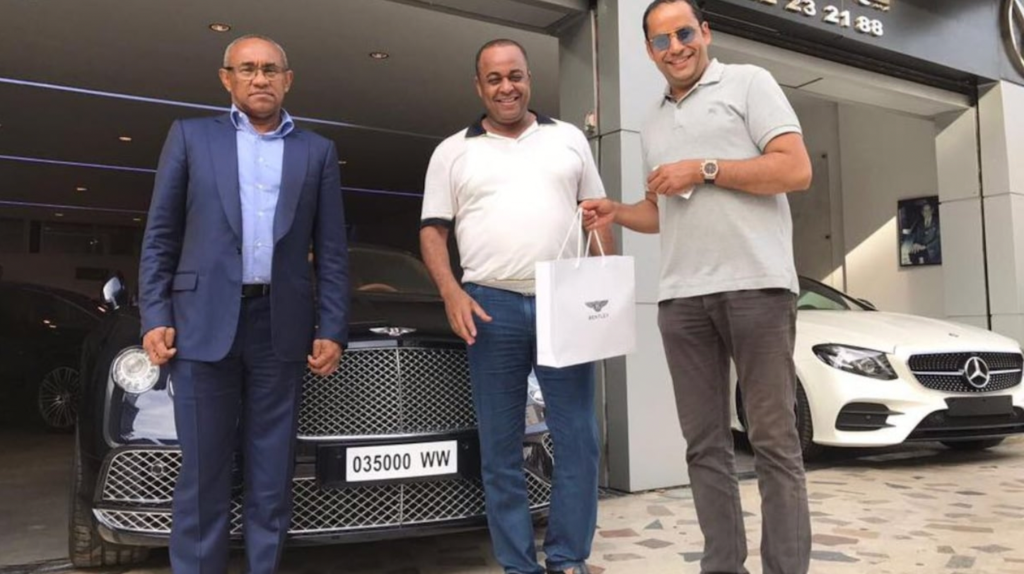
Ahmad’s knack for grift and corruption would eventually see him banned by Fifa’s ethics committee in 2020. Naciri would – away from football – later be sentenced to ten years in prison for involvement in a high-profiled international drug-trafficking operation dubbed ‘the Saharan Escobar’. Lekjaa, however, became a member of Caf’s executive committee at the 2017 election in Ethiopia. Two years later, he would be elected as the chairman of Caf’s finance committee, a role he retains. A Caf vice-president, he also serves on the powerful FIFA Council, joining in 2021 before winning reelection in 2025 with 49 of 53 votes.
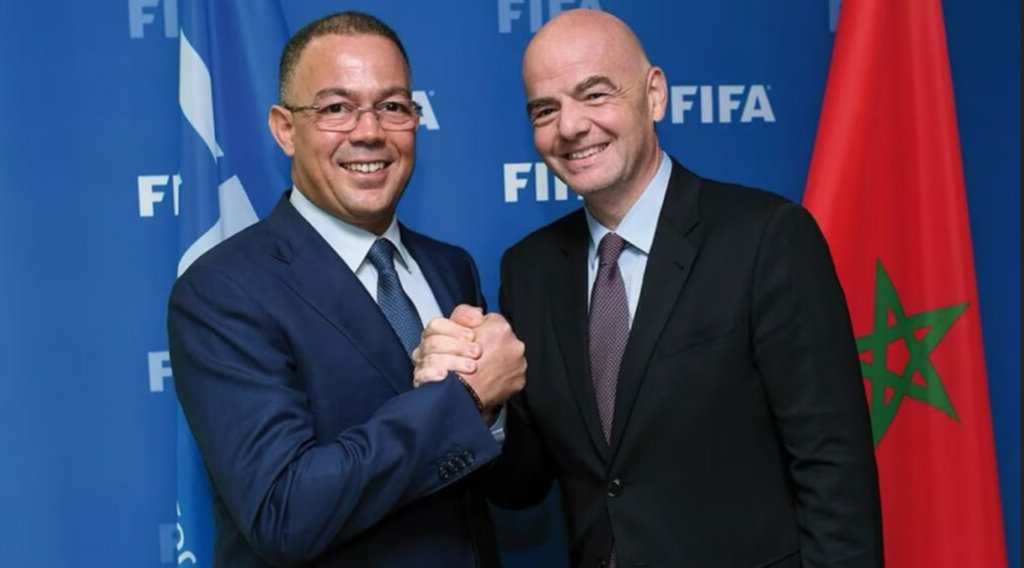
Despite his immense influence, he has not shown any desire to become president of Caf. The FRMF has endorsed Gianni Infantino’s re-election as Fifa president even after the FFE scandal this summer, but his relationship with the controversial Swiss-Italian seems to be one of convenience. For Infantino, Lekjaa is not just another vote that keeps him in power, but one who controls a block of them. For Morocco, the Fifa president is currently a useful ally on their road to achieve their goals as a nation; and for Lekjaa, to further his own influence within it. In July 2025, Fifa opened its African headquarters in Rabat, adjacent to the Mohammed VI Football Complex.
That doesn’t mean he cares little about the football on the pitch, though, as was evident when he allegedly headbutted referee Bamlak Tessema during the medal ceremony after the 2019 Caf Confederations Cup final between Zamalek and his own club RS Berkane after the latter lost on penalties. Despite several eye-witnesses and a reference in the referee’s match report, Caf’s disciplinary report let Lekjaa off the hook, citing ‘insufficient solid and corroborated evidence.’ Lekjaa himself denied the incident altogether. Tessema later issued a statement in which he forgave Lekjaa. In a more recent incident during the 2025 Wafcon final, where Nigeria beat Morocco 3-2, Lekjaa allegedly threatened referee Antsina Twanyanyukwa on the pitch after the match, according to the Nigerian Observer. Subsequently, FRMF filed a complaint with Caf. No sanction was given to the referee, but shortly afterwards the confederation unexpectedly removed its head of refereeing, Désiré Noumandiez Doué, without an official reason. Still, many observers regarded it as a vengeful backroom stab by Lekjaa. His temper is legendary.
A fellow Caf executive member, who spoke on the condition of anonymity, tells Josimar that the Moroccan football chief can also struggle to restrain his emotions in closed, official meetings.“He has sometimes become very furious and threatening if he doesn’t get his will, or decisions that don’t serve Moroccan interests. Of course, other members often support him because they feel they have no choice, as life can become very difficult for them if they go against him.”
A recent incident following the above-mentioned Wafcon final almost led to blows being exchanged between Lekjaa and his Nigerian counterpart Ibrahim Musa Gusau at an executive committee meeting at Caf in January this year, although both have denied it in public. The Nigerian FA subsequently issued a statement, calling the allegations ‘total falsehood’.
Western Sahara
Internally, Caf’s issues also reflect broader geopolitical interests. For Morocco, this is a major reason for all their investments in football, as the country seeks international acceptance of its sovereignty over Western Sahara. The region south of Morocco was once a Spanish province, but since the Spaniards left in 1975, its status has yet to be resolved. On the orders of King Hassan II of Morocco, 350,000 Moroccans civilians and 25,000 regular troops marched into the region in November that year, in an act that tried to force the international community to accept Rabat’s hegemony over Western Sahara. The International Court of Justice advised the United Nations at the time that despite Moroccan claims to the territory, the principle of self-determination should apply to the sparsely populated region. Algeria, who had border disputes and been at war with Morocco in the early 1960s, supported the Sahrawis of Western Sahara. Today, most of Western Sahara is under Moroccan control. A barrier filled with land mines marks the border, separating the Sahrawis from the coastline with its fishing resources and the inland phosphate deposits.
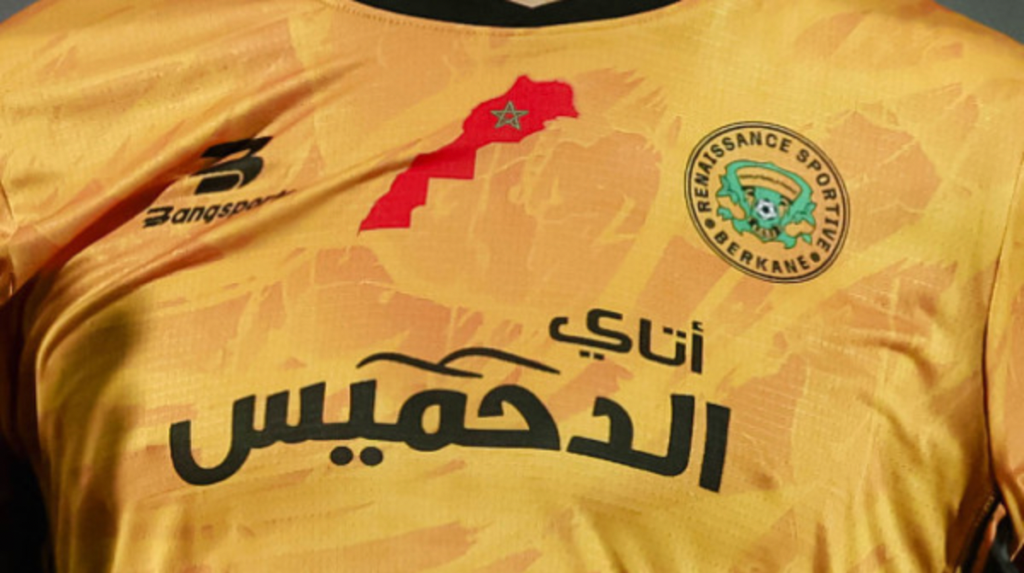
African football has been a proxy battlefield in this conflict. In a Caf Confederations Cup semi final in 2024 between USM Alger from Algeria and Lekjaa’s old club RS Berkane, the latter team wore shirts with a map outline including Western Sahara. As the Moroccans arrived in Algiers, custom officials confiscated the shirts. The Algerians saw it as a clear provocation, but offered to play the match as long as the ‘greater Morocco’ map was removed or covered. Caf, however, demanded that the shirts be returned and the match be played with them. So did Lekjaa’s former right hand man and RS Berkane president Hakim Benabdellah, who told Moroccan media outlet Hespress that they would refuse to play without the map on their shirts. Fifa contacted the Algerian FA to persuade them to go ahead, contradicting their own rules, which stipulate that no political symbols can be displayed on the equipment of players and staff. Zurich had previously sanctioned teams for this infringement. In the end, RS Berkane refused to play. The forfeit should, according to Fifa’s article 31.1 of Fifa’s disciplinary code, have resulted in an automatic 3-0 result, but when USM Alger appealed, Caf’s disciplinary committee rejected it. In addition, Caf’s interclub committee decided to instead award the match to RS Berkane, giving them a 3-0 result over their Algerian rivals.
The return match in Morocco was scheduled for the week after. USM Alger travelled, but the second leg never took place. In a meeting with RS Berkane officials, the Algerians demanded that the Moroccans play without the map on their shirts, which was rejected. The Algerian FA had already announced that they would bring the issue to the Court of Arbitration for Sport (CAS). After months of filibustering from both Caf and the FRMF, CAS agreed in principle with the Algerians that RS Berkane had violated Caf’s regulation regarding political symbols on equipment, and also reprimanded Caf for not adhering to their own rules. But USM Alger lost the case on a technicality, and were unable to postpone the final or force a rematch of the semi final. RS Berkane eventually lost the final against the Egyptian powerhouse Zamalek. This time, there were no accusations that Lekjaa had physically assaulted the referee, but many observers were convinced his power within Caf had led to RS Berkane getting to the final in the first place.
This was hardly a standalone example. The two-legged 2019 Caf Champions League final between Esperance de Tunis and Wydad Casablanca (then presided over by Naciri) was also surrounded by controversy on and off the field. The first leg in Casablanca ended in a 1-1 draw. But after a VAR decision that went against them in the second leg in Tunis, the Wydad players decided to abandon the pitch and the referee handed their opponents the victory. Caf, however, communicated that the match would be replayed at a neutral venue before CAS again had to tell Caf this was not according to competition regulations, and Esperance was eventually declared winners. This dispute coincided with corruption allegations against then-CAF President Ahmad Ahmad, who was detained and questioned by French anti-corruption authorities during the Fifa Congress in Paris. His own secretary general, the Egyptian Amr Fahmy, had been the whistleblower. Caf sacked Fahmy, who was terminally ill of cancer. Mouad Hajji, Lekjaa’s right-hand man and general coordinator for the FRMF, substituted him.
Hajji eventually had to step down from this position after Caf’s finances nosedived following Ahmad’s reckless spending and the cancellation of a lucrative broadcasting agreement with sports marketing agency Lagardère. Caf’s executive committee was strong-armed by Fifa to let them interfere, and Fifa’s own secretary general at the time, Fatma Samoura, took over the role as Caf’s secretary general. Lekjaa knew it was not the time to go against the Fifa leadership, and even testified against Ahmad to Fifa’s ethics committee. Despite the damning audit report done by PriceWaterhouseCooper, which lambasted the lack of financial control at Caf, the man from Berkane stayed on as chairman of Caf’s finance committee, and still does.
Rumours about Lekjaa’s influence within Caf surfaced again in January this year after the Afcon final between Morocco and Senegal. The Teranga Lions were furious as they had a goal disallowed into stoppage time. Shortly afterwards, Morocco received a penalty after a VAR review, prompting the Senegalese coach Pape Thiaw to order his players into the dressing room in protest. After fourteen minutes, Senegal’s captain Sadio Mané managed to persuade the team to return to the pitch. The referee, Jean-Jaques Ndala inexplicably had not called off the match by then, which would have handed Morocco the title as the other team refused to play. Brahim Díaz followed up by fluffing his penalty with a weak Panenka effort, only for Pape Gueye to score the only goal of the match in extra time. Senegal were then handed the trophy by Caf president Patrice Motsepe while Fifa president Gianni Infantino and a seemingly acceptant Fouzi Lekjaa applauded. But it did not take long for the FRMF to file a complaint about the outcome to Caf’s disciplinary committee. They, for once, dismissed the complaint. After all, as long as the referee had not called off the match, as would have been normal under the circumstances, it was not up to them to do so. But Caf’s Appeal committee thought differently, and handed Morocco a 3-0 win, and hence the title as Afcon champions. CAS again received a case concerning a Moroccan team, which is still to be concluded. Again, there is no evidence that Lekjaa had put undue pressure on Caf’s committees. But it was yet another episode that has done little to diminish the rumours of his tentacles in Caf’s corridors. As long as six months after the controversial final, Lekjaa told Al Jazeera: “Starting today, Morocco will no longer submit any bid to host African competitions, regardless of their nature. If other countries wish to organise them, we wish them the best.”
It is hard to interpret the statement as anything other than a reminder to Caf how few other African nations are able to host their competitions.
Prime Time
As Morocco’s football accomplishments continue, skullduggery or not, Lekjaa’s popularity is higher than ever. Still, he has until now not directly entered real politics, despite extensive connections to politicians and even the king himself. In theory, Fouzi Lekjaa is ineligible for a seat on the Fifa Council due to his role as Morocco’s Minister Delegate to the Budget. In 2o17, the former chairman of Fifa’s governance committee, Miguel Poiares Maduro, declared Vitaly Mutko ineligible for the same body because Mutko served as Russia’s Deputy Prime Minister. The rule, embedded within FIFA’s statutes to uphold political neutrality and prevent government interference, strictly prohibits active cabinet members from holding council seats. Although the rule still is in effect, it has become mute under Infantino, who persuaded the Fifa congress to remove Maduro at the Fifa congress in Bahrain two months later.
Fouzi has gone a step further as he recently joined PAM, the country’s second largest party in the 2021 elections. With general elections due on 23 September, political commentators have speculated that he is cashing in on his popularity to run for prime minister. Although having worked closely under the administration of the current prime minister Aziz Akhannouch, a fossil fuel billionaire representing the National Rally of Independents (RNI), he chose the rival party. Al Hoceima has left the party, but retains influence, and he has at least on one occasion been seen seated with Lekjaa during a national team match.
Morocco however is living through a tumultuous time. Unemployment is very high, especially among the youth, of whom many see the political landscape as a closed elite where patronage and corruption decide elections instead of their votes. The Arab Spring protests shook King Mohammed VI and the establishment, but little blood was spilled. Little changed notwithstanding concessions to demands such as a more liberal constitution and rights for women. The King however consolidated his power. Although Morocco has been a democracy since 1956, it is the king, and not the parliament, who has the last word on the appointment of judges, approves laws and selects ministers. Often considered a progressive monarch, Mohammed VI is still very popular – not least because of Morocco’s football success and the country’s rising importance and image internationally. In these areas, Lekjaa has been a most prominent servant.
“Lekjaa is very clever and cunning. He knows how to pick loyal and able assistants, and he knows how to delegate. He is very ambitious and industrious, and demands the same from his underlings. But most of all, he’s a patriot, and will do anything to promote his country”, a source who has worked with the Moroccan football president tells Josimar.
Contrary to expectations, on 1 September, the patriot announced that he would not stand in this year’s elections. That doesn’t rule him out of becoming prime minister should PAM win the elections, though, as the king can appoint anyone belonging to the winning party. And it doesn’t mean he’s not being groomed for it. For Lekjaa it might make sense to wait with frontline politics at home. Him joining PAM and its political bureau has certainly made waves ahead of the elections. The party is currently a minority partner in a coalition government with RNI. A senior figure of RNI, the House of Representatives speaker Rachid Talbi Alami, was identified in a leaked recording criticising PAM for snatching their officials. Although Lekjaa wasn’t mentioned by name, in the recording Alami warned against giving him a finance and budget portfolio in any future governments. But PAM’s followers think differently, as was evident at a party rally in Dakhla on 6 September. The 17,000 present yelled out the famous football chants normally used during the matches of the Atlas Lions as Lekjaa took the stage. No wonder Alami and RNI are worried about the football president joining their coalition partner.
Lekjaa’s crowning achievement is looming large; hosting the 2030 World Cup. Perhaps even with a World Cup final in Casablanca instead of Madrid. For PAM it’s a coup to have the apparently unfailing and efficient Lekjaa onboard with all the popularity votes he can generate. And while it might not be enough this year, the subsequent general elections in 2031, however, could be the perfect moment for the son of a teacher from Berkane to reach the pinnacle of his illustrious career.