


The fall-out from the demise of 777 Partners has resulted in a fire sale of assets by A-CAP, and a potential bail-out by Internazionale Milano owners Oaktree.
By Paul Brown and Philippe Auclair
Steven Pasko, a co-founder of 777 Partners, was once touted as the potential chairman of Everton. He would not pass an Owners’ and Directors’ Test these days.
On April 1, a U.S. court in the Southern District of New York permanently barred Pasko from serving as an officer or director of any public issuer of securities. It will decide on financial penalties and/or any disgorgement of ill-gotten gains at a later date.
Pasko was charged last November by the Securities and Exchange Commission (SEC) with fraudulently raising capital at 777 Partners, misleading investors, and diverting funds for his own personal use.
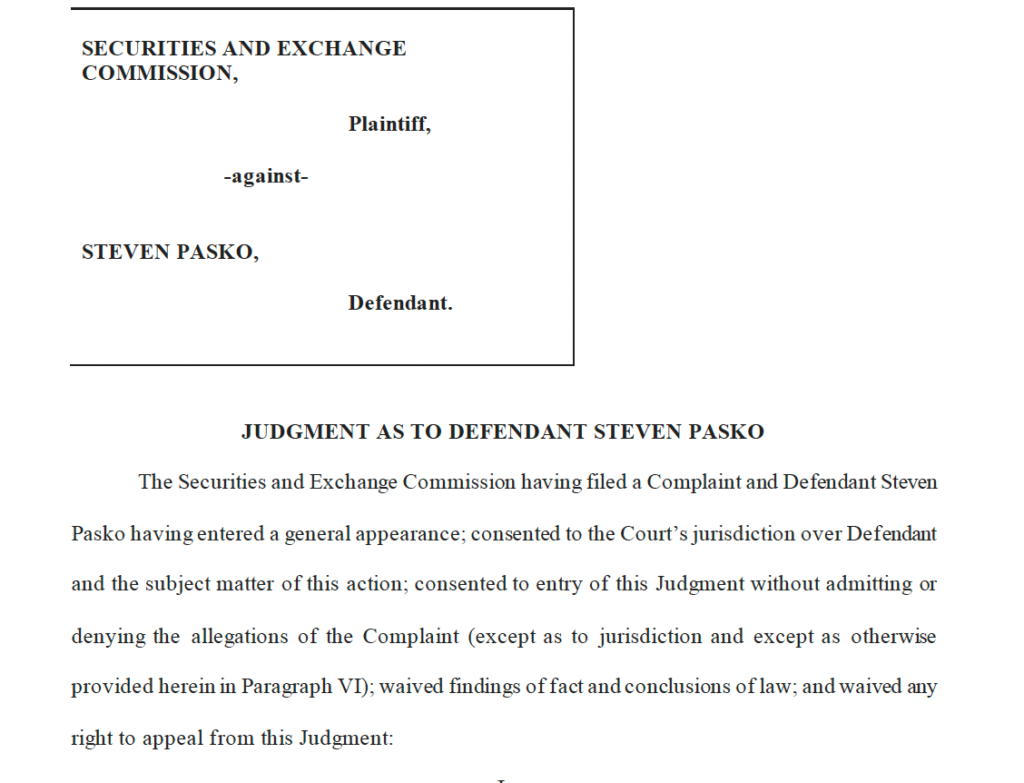
Criminal charges have not been brought against Pasko by the U.S. Department of Justice (DOJ), which instead indicted Josh Wander and the firm’s former CFO Damien Alfalla for their part in “a scheme to defraud lenders and investors out of more than $500m.”
But the days of any of them ever owning Everton are long gone following the collapse of 777 Partners’ attempted takeover of the Premier League club, and the subsequent collapse of the firm itself.
Pasko’s ability to pay any fine will likely be helped by the fact he has been selling assets for some time, having listed his yacht for sale as far back as October 2024. However, he is not the only one conducting what appears to be a fire sale.
Puppeteer
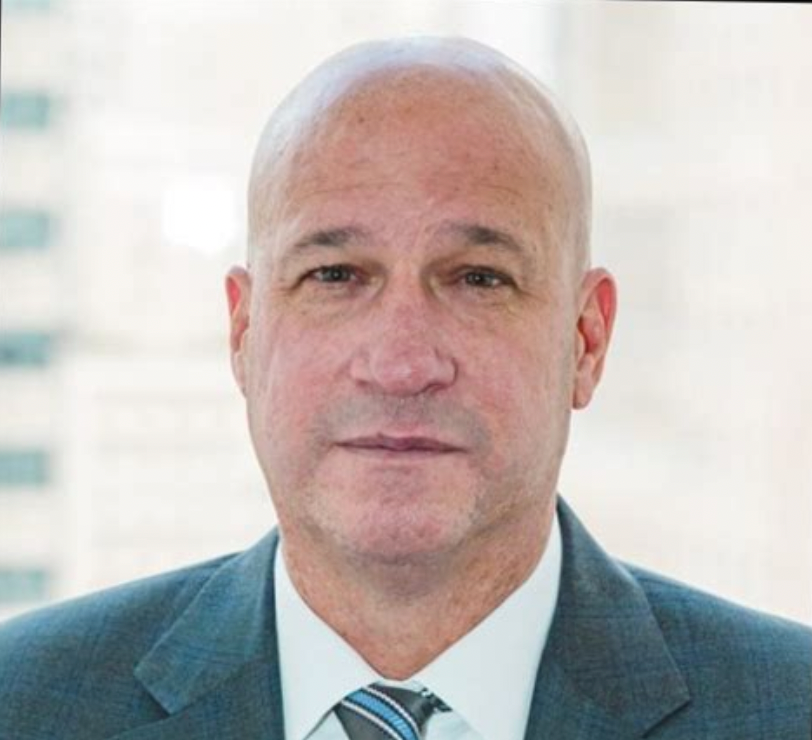
Since the turn of the year, the firm most exposed to the fallout from the Miami company’s collapse has been doing the same.
A-CAP was the biggest creditor to 777 Partners and remains accused in an ongoing lawsuit of being the “puppeteer” pulling their strings. Josimar has previously reported how executives from A-CAP received subpoenas in the DOJ probe into 777’s activities, and understands that this investigation, and a parallel one by the SEC, remains ongoing.
Owned and run by chairman and CEO Kenny King, A-CAP is a New York-based insurance and financial services company which claims to have either $12, $15 or $16 billion of assets under management, depending on which of the firm’s press releases you consult.
When 777 Partners collapsed, A-CAP exercised its first lien rights to seize most of the firm’s assets, including shares in various football clubs. But A-CAP itself has been fighting financial fires ever since. In January, it had two of its life insurance companies downgraded by credit ratings agency AM Best and kept under review with negative implications. The downgrade, a rare three-step drop from Good to Fair, noted the “weakness” of A-CAP’s business profile, a decline in demand for its insurance policies and in its capital adequacy ratio, and “possible pressure on premium growth and profitable operating results… in the near term.”
AM Best also pointed to A-CAP’s “elevated risk profile related to its reinsurance relationships and assets for which the investment cash inflow does not match the cash out-flow of the insurance liabilities.”
In addition, Best also highlighted “reputational damage resulting from publicized regulatory rulings.” This was a reference to a bombshell filing by the Utah Insurance Department claiming the A-CAP insurers it examined were actually insolvent as a result of their dealings with 777 Partners. Despite Utah seeking to seize control of these three A-CAP companies, a settlement was later reached, dismissing the state’s rehabilitation petition and allowing King to stay in charge.
As a result, A-CAP is under pressure to raise capital. It is doing so by selling assets.
Oaktree to the rescue?
Atlantic Coast Life, one of the very insurance companies downgraded by AM Best, is chief among these assets. And who is the prospective buyer? Private equity firm Oaktree Capital Management, the majority owner of Italy’s FC Internazionale Milano.
On March 13, Oaktree signed a transaction agreement to acquire a controlling stake in Atlantic Coast and provide capital support to another A-CAP insurer downgraded by AM Best, Sentinel Security Life (*). The deal will, however, not close without the approval of state insurance regulators, and unless A-CAP successfully implements a series of “restructuring transactions”. In a press release announcing the deal, King admitted that “we have significant work ahead of us to successfully carry out the transactions contemplated by our agreement.” Sources with knowledge of the agreement have also told Josimar that due diligence by Oaktree remains in the early stages.
Atlantic Coast, one of the companies from which policyholder funds were funnelled to help support the multi-club operations of 777 Partners, is not the only thing A-CAP is selling.
In January, pharmaceutical distribution company Morris & Dickson completed the purchase of A-CAP-linked company Prodigy Health in a deal which Josimar understands involved no cash changing hands. In exchange for taking over the loss-making company, its debts of around $60m will be written off. A-CAP was an investor in Prodigy and had appointed three company executives to its board of directors.
April Fool
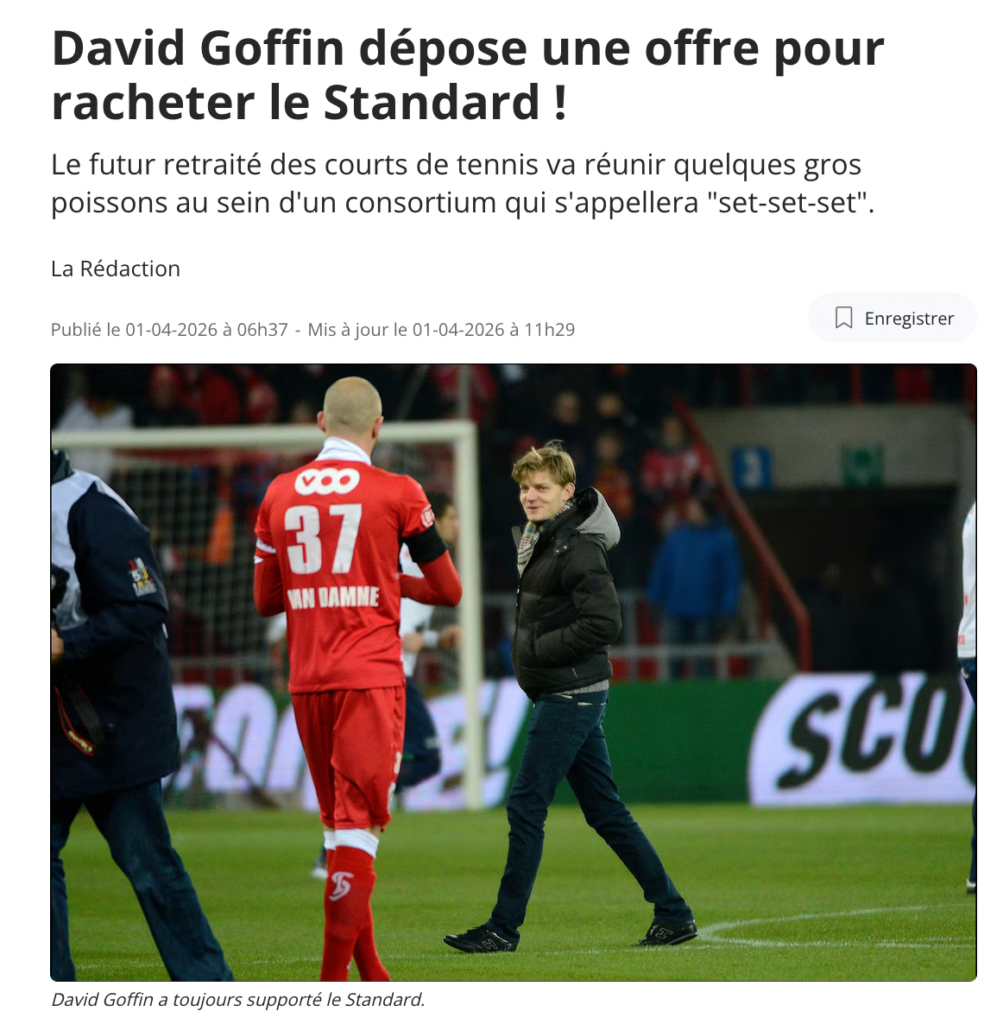
A-CAP has also been trying to sell the football clubs it seized from 777 Partners. Melbourne Victory was divested over a year ago, again for no cash fee. Standard Liège was nominally “bought” by a consortium of local investors who were ushered in by A-CAP to find an actual buyer, something they have so far failed to do given the club’s catastrophic financial state. Standard’s situation has improved somewhat over the past year, but to the extent that its losses and debt are now “only” 13 million and 27.8 million euro respectively. Despite rumours of “foreign investors” acquiring a stake in the club appearing regularly in local media, local fans have all but given up on the hope of finding a saviour, which led La Dernière Heure newspaper to choose the club’s predicament as the theme for an April’s Fool joke, when they announced that recently-retired tennis player David Goffin was about to buy Standard.
Red Star FC has attracted some interest from potential buyers over the last few months, though no concrete offer is currently under consideration. Josimar understands that A-CAP have so far honoured their financial commitments towards the Parisian club, the most “sellable” of their football assets: Red Star FC currently sits 4th in Ligue 2 and still stands a chance of gaining promotion to Ligue 1 via the playoffs, which would greatly increase the club’s attractiveness to prospective investors.
In Brazil, a buyer has emerged for Vasco da Gama, but complications remain. A-CAP controls 31% of the club, but the other 39% of shares which 777 Partners pledged to buy, are the subject of a dispute which has taken them out of A-CAP’s hands. In essence, a Rio court froze these shares and instead placed them under the control of the club, which holds the other 30% of Vasco.
Blue Star CEO Marcos Lamacchia, the stepson of Leila Pereira, the president of rival Brazilian club Palmeiras, is now attempting to buy the club but cannot do so until the dispute over the 39% shareholding is resolved. It is unclear if it was A-CAP or Vasco SAF which initiated the sale, but it would suit both parties.
And yet, is such a thing even legally possible? Doesn’t it violate the injunction against the dissipation of assets imposed on A-CAP by a New York court in the case brought against them by Leadenhall, a rival lender to 777 Partners?
The answer lies in the fact that on March 23, in a win for A-CAP, that injunction suddenly became much more limited in scope, with an appeal court ruling that the trial court did not have the power to freeze certain assets in advance of final judgement. This would seem to clear the way for Vasco to be sold, should the issue of the disputed shares be resolved.
False statements?

A-CAP will encounter a different issue in trying to sell its shares in Genoa. On February 5, an Italian court confirmed the precautionary seizure of what had become a diluted 23% stake in the Serie A side thanks to a capital raise which allowed Romanian businessman Dan Sucu to become majority owner. A-CAP described this takeover as a “coup” and challenged it in court. The company’s lawsuit alleging fraud on the part of Genoa CEO Andres Blazquez, a former 777 Partners employee, was dismissed in late December, with the judge ordering – at the request of Blazquez and Genoa CFC (*) – the transfer of documents to the Public Prosecutor to assess whether Jill Gettman, A-CAP’s Chief Legal Officer, and Paul Mann, Managing Director of A-CAP advisers Moelis & Company, made false statements.
Meanwhile, King has other problems to contend with. He is still among a large group of defendants accused of engaging in “a complex and massive fraud” against Great Western, another Utah-domiciled insurer, which resulted in losses for that company exceeding $135 million.
King is also facing a new criminal probe into another one of his investments, this time a Florida-based telehealth venture called Glutality. A-CAP was Glutality’s primary lender and became its owner after foreclosing on the company’s assets – worth $25.5 million – in the months before it filed a bankruptcy petition last November. Court filings do not allege wrongdoing by A-CAP but Glutality’s former executives are under investigation for alleged financial misconduct and fraudulent transfers by the company’s court-appointed restructuring manager.
A-CAP did not reply to Josimar’s questions. Oaktree referred to the transaction agreement of March 13.
(*) Sentinel was one of the A-CAP insurers the Utah Insurance Department tried to seize, claiming policyholders were endangered. On April 2, Utah State Senate Majority Leader Kirk Cullimore was appointed as its President.
(*) A statement released by Genoa CFC after the dismissal of the case against Andres Blazquez read: “Considering the discrepancies identified between the statements of the witnesses Paul Mann, Jill Gettman and Enrico Preziosi and the additional evidentiary material in the case file, the defendant’s defense requested the transmission of the documents to the Prosecutor’s Office to assess whether the circumstances of the offense provided for in art. 371-bis of the Criminal Code, in relation to the statements given to the Prosecutor’s Office by the first on May 8, 2025, respectively by the second on April 9, 2025”.