

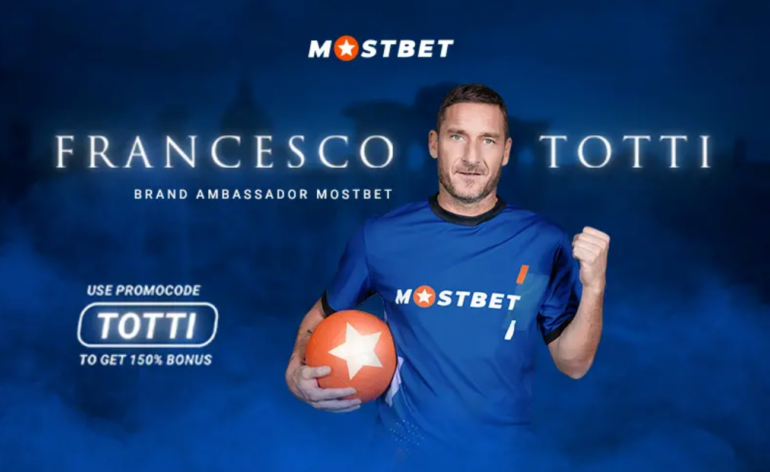
A Curaçao-licensed bookmaker that produced sponsored content for PornHub claims Francesco Totti as an ambassador – and the honorary consul for Denmark is the managing director of the trust behind it.
By Sam Kunti and Steve Menary in Willemstad, with additional reporting by Philippe Auclair, Jack Kerr, and Trouw’s Matthijs van Dam.
Not even an island paradise is immune from the global outbreak of data centres. A visitor to Curacao’s harbourside capital of Willemstad will be struck by the number and size of the server farms and e-offices which have mushroomed here. In other parts of the world, data centres are weaponising military-grade surveillance data or pumping out AI slop. Here in Curaçao, they are one of the few visible signs of a leading export industry that otherwise operates in obscurity: offshore betting.
If a map of the world represented countries not by their landmass but instead by their contribution to the illegal sports betting market, then Curaçao would not be a speck in the ocean but a continental body as big as Australia. It is to offshore gambling what Panama or the Cayman Islands are to the tax secrecy industry: a safe space for those who do not wish to play by the usual rules.
While many Europeans may not have heard of the island prior to its surprise entry into this year’s World Cup, they will be familiar with the gambling brands licensed here: the winners of this year’s Champions League, La Liga, Ligue 1, Premier League, Serie A and Scottish Premier League all have, or recently had, partnerships with Curaçao-licensed bookmakers. One of the latest examples of this is the online crypto casino chexx.bet, whose name was wrapped around Selhurst Park when Erling Haaland scored the opening goal in Manchester City’s victory at Crystal Palace last weekend.

Some of Curacao’s data centres date from the arrival of the “first wave” of online gambling operators, in the late 1990s and early 2000s, like the E-Commerce Park (ECP), the “first built for purpose datacenter in the Pan Caribbean area”. Some are far more recent, like the futuristic-looking Blue NAP Americas data centre. Some landmarks of the past have been repurposed, such as the former Ritz Hotel in Scharloo, now described as an “E-zone” which offers office suites and server space.
Until recently, the country’s gambling law was just 260 words long. That light-touch approach was a magnet for betting operators who sought a veneer of legitimacy and a low-key approach to diligence. While other countries sought to rein in the worst excesses of the gambling industry, Curaçao provided a haven for internet-fuelled, post-globalisation regulatory arbitrage.
International pressure inevitably followed and Curacao responded, in late 2024, with reforms known as the National Ordinance on Games of Chance (LOK). They require among other things, that digital records of critical information, like a player’s gambling and financial transaction records, are kept on Tier IV data centres on the island. It has solidified the island’s reputation as a pan-Caribbean tech-hub.


Trust issues
What is less visible is who is behind these bookmakers, and therefore, where the money goes. Because both the old system and the new, just in more verbose terms, allow a bookmaker to use the island’s well-developed financial trusts industry as a cloak of anonymity, shielding them from public scrutiny.
Curaçao is almost uniquely positioned in this regard. It is an autonomous Caribbean island which enjoys historical and legislative ties to the Kingdom of the Netherlands, of which it is still a constituent, and through this, it is also an overseas country and territory associated with the European Union. When Dutch multinationals like Philips, Unilever and Shell wanted to channel finances away from the invading Nazis to safety, they thought of what was still a colony, giving birth to the offshore trust system, which survived and flourished during the island’s march towards autonomy.
Today, the Curaçao economy runs on trusts and tourism, and while those on the island can’t use the country’s offshore betting services, the trusts are critical to them.
“Why are you here”?
Josimar visited some of the addresses used by trust companies on the island. One was an abandoned house, where the open mailbox contained an empty rum bottle, commingled with legal correspondence from Germany and Austria, two jurisdictions where bettors claim they have not been paid out by Curaçao-licensed bookmakers.
Another was just around the corner from the Curaçao Gaming Authority, as if to illustrate the cosy relationship that exists here between regulators and the supposedly regulated.
At a third location, the offices of a company that helps gambling companies obtain a licence in Curaçao, we enquire about 1xBet, the Russian-Cypriot gambling company listed as operating there. But nobody is willing to answer questions. “Tell me why you want to know this,” asks one employee, who suddenly appears. “Why are you here?” Security guards chase us out of the car park.
Trusts are so ingrained in the local economy that Denmark’s honorary consul for the island is a trust director. Christie Geisler Hansen, who has been Denmark’s honorary consul in Curacao since 2007, is listed as an ‘Independent Trust Specialist’ on an outdated LinkedIn account and as the managing director of Odin Trust B.V. in Curacao company filings.
By combining records from the Curaçao Gaming Authority and Curaçao Commercial Register, Josimar found at least six bookmakers currently operated by companies under the statutory directorship of Odin Trust B.V. Four more are operated by companies which use Odin’s unit address, which is also used by a Curaçao-based software solutions start-up, presumably serving the gambling industry.
Odin’s PO box is also used for Geisler Hansen’s Danish consular work. In other words, work representing a country famous for its ethical approach sits alongside work for an industry infamous for its lack of it. Josimar reached out to the honorary consul via email and phone for comment, but received no reply.
Gambling, porn and football legends
Of Odin’s clients, none stand out more than Bizbon NV, which controls the license for MostBet. Believed to be a Russian operation, it signed Italian football legend Francesco Totti as a brand ambassador in 2022, as well as cricketers Andre Russell in 2023 and Brendon McCallum in 2025.

Its marketing efforts go well beyond that though. MostBet has also plastered its brand across PornHub, with its watermark and promo codes across dozens of videos featuring titles like “nymphomaniac stepmom”, “busty stepsis” and “juicy schoolgirl”. It is content suggestive of illegal and predatory activity. A search for “Mostbet” and “porn” will yield multiple graphic results, including what appears to be a dedicated PornHub channel.
Francesco Totti is not the only football “legend” to have lent his name to Curaçao-based betting operators. Former France international Patrice Evra became an ambassador for Stake in 2025. Togo’s Emmanuel Adebayor has been promoting 1Xbet’s sister company 22bet in Africa since 2022. Croatia’s most-capped player Luka Modrić has signed up with GemBet, found to use illegal banking channels in Singapore during the World Cup.
Then there is Andrea Pirlo, a World Cup winner with Italy in 2006, who switched from 1Xbet to the Curacao-licensed Russian sportsbook Fonbet in October 2025. In July of this year, the double European Champion with Milan looked certain to become the manager of Italy’s men national team when Italian media revealed the nature of his relationship with Fonbet, who had invited him to attend the final of the Russian Cup just a month beforehand.
Fonbet’s owner Sergey Lomakin is also known as a Putin loyalist who has been sanctioned by Ukraine and whose Cypriot “golden passport” was revoked in 2024. Such was the media and political uproar that Pirlo withdrew his name from the list of candidates for the Italy job within a few days. The two other “legends” who had put his name forward, Giorgio Chiellini and Paolo Maldini, also resigned from their positions in the Italian federation.
Another brand, using the Curaçao trust and licensing system, present across PornHub is 1Win, an operator known for having targeted minors and the subject of a massive police crackdown in Kazakhstan. Like FonBet, 1Win’s statutory director is Solutions for Management and Employment Support N.V. Its website, like most Curaçao-licensed operations, is propped up by a range of European companies – from gaming software to live data to financial services.
While Europe thinks of Curaçao as an offshore gambling hub, it’s actually very much in-house: a European outpost making use of European tech and promoting itself through European star power.
Suspicious transactions
The trusts are key to the offshore regime. They are the perfect vehicle to obscure who the ultimate beneficial owners backing betting operators are, and to hide payments by using corporate service providers.
In theory, trusts do have the obligation to report suspicious transactions above one million guilders or when they suspect that a transaction is part of a money-laundering exercise to Curaçao’s Financial Intelligence Unit.
In theory. And in practice?
“The money launderers know very well which channels to use,” says Peter Comello, a former Dutch police assistant prosecutor and financial intelligence expert.
While Curaçao-based companies are legally required to hold local bank accounts, trust management firms bypass oversight by routing operations through third-party corporate service providers.
This “shrouding technique” makes following the money impossible once it hits these shores, he explains to Josimar between sips of diet cola.
“The CGA [Curaçao Gaming Authority] is supposed to be researching these entities, but whether that is happening in practice, who knows?”
Josimar sent Curaçao’s Financial Intelligence Unit a series of detailed questions about the country’s financial crimes safeguards. For example, how many reports of suspicious transactions are received from trusts controlling betting companies. Like so often on this island, genuine concern was met with silence.
Big buck hunters
Registry records from the Curaçao Gaming Authority show more than 600 active, pending or forfeited licenses, as of August 2026, and around 50 that have been surrendered.
It means B2C license fees alone could generate around €30 million per year, making up almost 1 per cent of the country’s GDP. It sounds a lot for a small island nation, but the half that goes to the Treasury equates to just €100 per resident.
It’s also a drop in the ocean compared to the US$1.7 trillion in revenue that the illegal gambling industry generates in a year, according to the United Nations Office on Drugs and Crime.
A former executive of a Curaçao-licensed casino told Josimar that his old employer turned over in excess of US $9 billion in 2024 alone.
Pinnacle, whose former CEO and current special advisor Paris Smith, a.k.a Jessica Davis, is said to be close to Curaçao’s Prime Minister Gilmar Pisas, also generates massive revenues. But like other Curaçao-based companies whose income is almost exclusively derived from bets placed by foreign customers, and despite changes introduced on 1 January 2020, the statutory 22% corporate tax does not apply to them. Neither do they pay VAT. The actual rate of corporate tax they are subjected to varies between 0 and 3%. Consequently, the gambling industry’s contribution to the island’s economy is by all intents negligible.
“Where has the money gone?” wonders an industry insider, as he discusses the fortunes generated by these companies, over goat curry in a Willemstad restaurant.
Luigi Faneyte, an advisor to a member of Curaçao’s national parliament, has similar concerns. Dr Faneyte is a vocal critic of the country’s gambling system and of its recent reforms, so much so that he now fears for his life.
“The money under the LOK should have gone to Curaçao’s people, but that didn’t happen – even if it was sold this way.”
“Nothing has become of the promises of a higher pension,” he says.
While the LOK has certainly driven some operators away – BC.GAME, the cryptocasino whose Pacman-like branding has adorned Leicester City’s outfit in recent seasons, claimed Curaçao had become a “hostile” environment for bookies – the exodus that some had predicted did not come to pass. 1xBet, Dafabet and Stake are among the major brands who chose to adapt to the new regime. They could do so with little difficulty, because the Curaçao system is so intrinsically flawed that proper reforms would be kryptonite to its clientele.
The transition has been a mess. The case of 8Xbet, a current sponsor of Aston Villa, Bournemouth, Chelsea, Coventry, Ipswich, Newcastle and Sunderland of the Premier League, is symptomatic of the dysfunctional nature of the system.
As shown in the WIPO database, one of the owners of the brand’s trademark is a company called 978 Tech N.V., with which the sportsbook has been associated since it first appeared in the early 2020s. Yet the registration of 978 Tech N.V., which holds 8Xbet’s licence in Curaçao, is listed as “discontinued” as of 24 July 2026 in the island’s company registry, while the operator’s mothership website 8xbet.com now mentions a Marshall Islands company, APLUS Limited, as the legal owner of the brand; but APLUS Limited does not hold a Curaçao licence.
“The LOK is being used as a smokescreen,” Dr Faneyte says.
Josimar visited the Curaçao Gaming Authority in order to find out more about these issues. Once again, we were rebuffed, left to bake in the midday sun. A member of staff eventually explained that no-one was available to see us. Not just now, but at any other time.
“That is how we work at this organisation,” they said.
Right of reply
The following month, we were contacted by the Authority’s Executive Secretary, Darby Suriel-Hernandez.
She calls the LOK a “substantial undertaking for CGA and for the sector as a whole”, and says her organisation “remains focused on strengthening supervision, promoting compliance, safeguarding the integrity of the licensing system, and ensuring that Curaçao’s regulatory framework continues to develop in line with its statutory objectives”.
She said licensees are expected “to operate responsibly and within the boundaries of applicable legal requirements” – in both Curacao and the offshore jurisdictions where they offer their services – and that supervision of the industry “is conducted on a risk-based basis”.
The Authority reviews each applicant’s corporate structure, beneficial ownership and governance details, she said, and applications that do not meet the applicable requirements “may be refused”.
“The existence of a license does not exempt any operator from regulatory oversight,” she said.
Mostbest, Bizbon N.V., 8Xbet, BC.Game, Chexx, Francesco Totti and Curaçao’s Ministry of Finance were approached for comment.

The production of this investigation was supported by a grant from the Investigative Journalism for Europe (IJ4EU) fund.

Illustration: Chantall Veerman
This story is part of ‘Curacao: The EU outpost driving the global offshore betting market’, a collaboration between Play the Game, Josimar and Trouw.
This publication reflects only the author’s view and the European Commission is not responsible for any use that may be made of the information it contains.