

In June 2020 Norwegian player agent Atta Aneke paid David Datro Fofana’s mother 20 000 euro, according to a voice message. Fofana later signed for Molde FK for free. In their submission to CAS, Molde accuses Abidjan City of ‘extortion’.
By Lars Johnsen
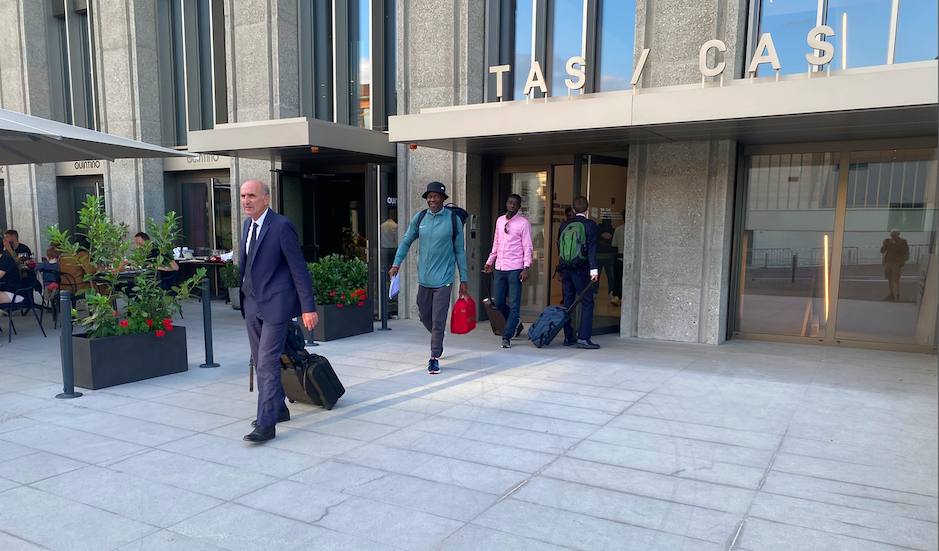
In Lausanne, a small town in the French-speaking Swiss canton of Vaud, some 60-plus kilometres north-east of Geneva and beautifully located on Lac Léman, the early-morning June sun was stinging in the eyes of two groups of people heading into the offices of the Court of Arbitration for Sport (CAS). One group was Abidjan City, represented by club president Marco Taddei Né and their Marseille-based French lawyer François-Luc Ponthieu.
The other group, arriving in a black Tesla ten minutes before the Ivorians, was a delegation from the Norwegian club Molde FK, including club secretary Snorre Strand, a Swiss lawyer and an interpreter, and not least, David Datro Fofana himself, who is the centrepiece of the case.
After filing the case with CAS in September 2022, it was finally time for the hearing.
“At last. It has been going on for three years now. We look forward to presenting our case,” Abidjan City president Marco Taddei Né said when entering the CAS building as the Swiss clocks were approaching 09:30.
Molde FK club secretary Snorre Strand declined to comment, as his posse made their way into the CAS premises.

“Molde stole our player”
Just before Christmas, Molde FK sold David Datro Fofana to Chelsea for a fee totalling 13 million euro, a record sale for a Norwegian club. As Josimar reported in January, Fofana’s former club in Côte d’Ivoire, claimed he was not Molde’s to sell. According to Abidjan City FC president Marco Taddei Né, David Datro Fofana had a professional contract with them, signed in 2019 and valid until June 2022.
“In 2019 Molde asked our permission to talk to the player.
“Molde knew he was under contract with us, so they asked us for permission. I said yes,” Marco Taddei Né, told Josimar in January.
With Abidjan City’s consent, Fofana went on trial in Norway. On 29 January 2021 Fofana signed a contract with Molde.
“Molde stole our player,” Marco Taddei Né said.
In their ‘answer to the appeal’ submission, the preparation document for the CAS hearing, Molde FK didn’t mince their words. In the no holds barred document, the opening paragraphs set the tone of the Norwegian club’s approach.
“This case is about a club, Abidjan City FC (‘ACFC’ or the ‘Appellant’), playing in the third division in Ivory Coast who is illegitimately and unlawfully seeking to financially benefit from the hard work and success of a player, Mr David Datro Fofana (the ‘Player’ or ‘First Respondent’), despite never having had real interest in him or invested in him.”
“In order to try to do so, ACFC is claiming that it had a ‘professional contract’ with the Player valid until June 2022, which the Player supposedly breached when he joined Molde FK (‘Molde’ or ‘Second Respondent’) on 29 January 2021. Neither the Player or his legal guardian (the Player was a minor during his registration with ACFC) ever signed with or were ever made aware by ACFC of any such contract.”
“What the Player and Molde cannot accept is ACFC resorting to unlawful means and pressures to extort financial benefits which are not due.”
To sum up: In the document sent to CAS in preparation for the hearing, Molde accuses David Datro Fofana’s former club of criminal activity.

“Many wanted him”
In March 2020 David Datro Fofana flew to Norway to train with Molde, in agreement with Abidjan City. Their discovery of the talented Ivorian had been, according to the newspaper Romsdals Budstikke, a cooperation between Molde’s head scout John Vik, player agent Atta Aneke and Aneke’s scouts in Africa.
Just a few months after the trial, on 4 June 2020, David Datro Fofana and his mother signed a representation contract with Atta Aneke. Around the same time Aneke allegedly paid 20 000 euro to Fofana’s mother. In a voice message to Marco Taddei Né, David Datro Fofana’s brother Ibrahim Fofana claims that his brother knew little of what was going on around him and that his mother was running things.
“He knows nothing of Atta,” the brother says in the message.
The brother also said that David Datro Fofana knew that his mother had received 20 000 euro from the Norwegian agent.
“According to ACFC’s report of facts, it seems during the summer of 2020, ACFC started to negotiate with several clubs the potential transfer of the Player. It is worth noting that the Player was never informed about such negotiations,” Molde writes in its CAS submission.
This doesn’t align with previous statements from Molde.
Head scout John Vik said the following to Romsdals Budstikke:
“He trained twice in March [2020] and convinced us completely. As other clubs showed interest, the club decided to buy him without further trials.”
Players without contracts aren’t bought. They’re just signed.
When David Datro Fofana later was sold from Molde to Chelsea, a jubilant Atta Aneke told Romsdals Budstikke it had been ”a miracle” that Fofana, “one of the most talented players in Africa, not only in his age group, but generally,” had chosen Molde a his first stop in Europe.
“When we found him in Africa, it was almost a wonder that we could bring him to Norway. Many wanted him, it was difficult. It’s extra sweet that this transfer breaks earlier records by a wide, wide margin,” Aneke told TV2.
To sign him, Molde needed to act fast as other clubs were presenting offers, or about to do so, to Abidjan City.
In Molde’s submission to CAS, however, the interest shown by European clubs is turned into the player “was never informed about negotiations.”
The phone call
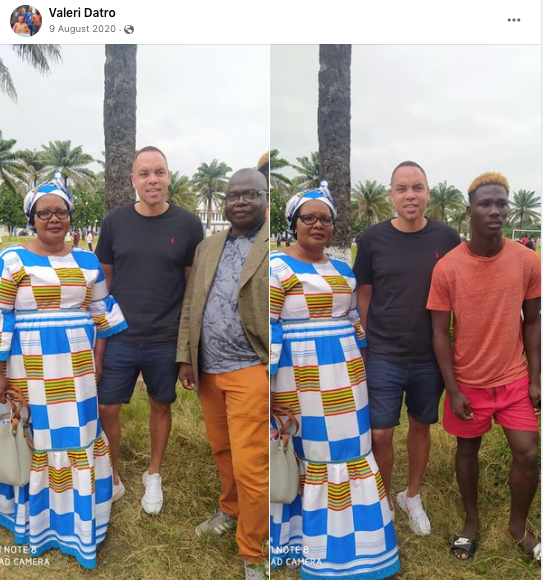
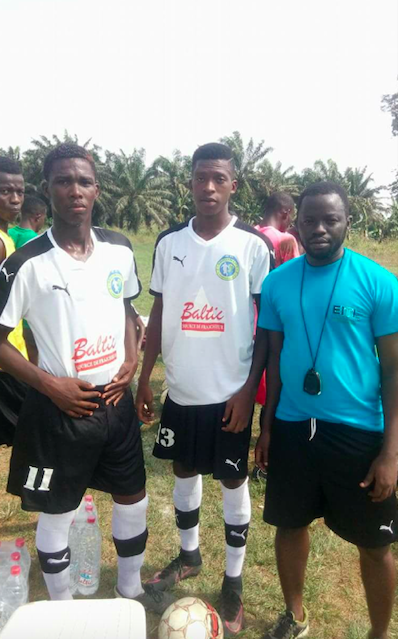
After having played four years at Abidjan City, spending hours and hours per week training, playing and travelling to matches, and just weeks after signing a representation contract with Atta Aneke and the mother allegedly receiving a huge payment from the agent, the mother suddenly claimed Fofana’s contracts with the club had been forged.
Forging signatures is document fraud. This alleged crime was not reported to the police, only to the Ivorian FA.
At the time, both due to Covid-19 and federation mismanagement, the Ivorian FA was basically a non-functioning body. The complaint was re-filed on 30 October 2020.
Shortly after, in November, David Datro Fofana was called up to the Côte d’Ivoire men’s national team. Excited by the call-up, he immediately called the Abidjan City president Marco Taddei Né to tell the big news.
“Alright boss, I want to tell you, they’ve called me about la sélection,” Fofana said in a voice message heard by Josimar.
“For me it was a great pride. 17 years old and to be in the national team, from Abidjan City. It was a feeling that the work done at the training level was working,” the president says.
On 17 November David Datro Fofana was on the bench as the senior men’s team faced Madagascar in Africa Cup of Nations qualifier, in a squad consisting of players like Franck Kessié, Sébastien Haller and Sinaly Diomandé, to name a few.
On 23 December, the day before Fifa appointed a normalisation committee to run the Ivorian FA, and the day after David Datro Fofana became an adult, FIF made its ruling in the forgery case, concluding that the signatures had been forgeries.
“The federation had to act quickly to decide, because they knew that Fifa was going to take over,” Marco Taddei Né says.
On 29 January 2021 Fofana signed for Molde.
“No-one from our club authorised the transfer. It was done by FIF without our knowledge. When we contacted FIF, they blamed computer trouble, and that it was approved by a FIF secretary,” Marco Taddei Né says.
Status, not payment
Under the heading ‘factual background’, Molde FK argues that Abidjan City forged the contract with the player’s mother when David Datro Fofana was just 14 years old. And the club’s arguments build from there.
Abidjan City provides training and football education for a number of teenagers, over several years. Today the club provides training for 40 players, from age 13 to 19.
“That we forge training contracts with 14 year old boys, in the hope that they one day might be attractive players and sell them to Europe, is absurd,” the Abidjan City president says.
He explains they sign training contracts with all players in their academy.
Molde claims neither Fofana nor his mother signed any contracts with Abidjan City, arguing that all contracts filed with the Ivorian FA have been forgeries. The Norwegian club states that the only paper Fofana’s mother ever signed with Abidjan City was a parental authorisation to travel in 2017 when Fofana was 14 years of age.
Molde claims, too, that Fofana was de-registered as an Abidjan City player by the club after a loan period to Academie de Foot Amadou Diallo (AFAD) ended – thus making him an out-of-contract player, and free to sign with any club.
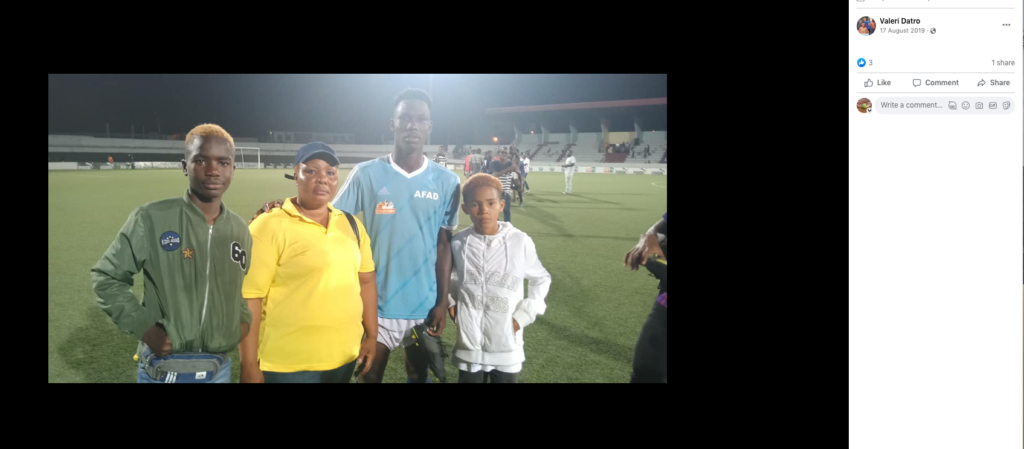
As Fofana’s ‘international transfer certificate’ indicates, he was de-registered as an Abidjan City player on 31 May 2020. The same date as the loan spell at AFAD ended. As Marco Taddei Né explains, Fofana was never de-registered by Abidjan City.
“The de-registration was done by people at the federation. The date was set to the same date the AFAD loan agreement ended, so it looks as if our club had done it. We have never de-registered Datro,” the president says.
“And look, after this, I met Atta Aneke. I told him we have a professional contract with Datro, and we have an offer from Beveren in Belgium. After this meeting the mother suddenly claimed the signature was not hers.”
In their submission to CAS, Molde FK points out that Fofana was never paid whilst registered as a professional at Abidjan City. They make the case that if a “hypothetical [professional] contract” exists, the player had just cause to breach it, and sign for Molde, as he had never received a salary.
Abidjan City explains that Fofana’s status as a professional is about status, not payment. Abidjan City is an amateur club focusing on development of young players.
“The club takes care of the expenses and equipment related to our players’ footballing activity. It is true we never paid Fofana a salary, but for him to be loaned to top division team AFAD he had to change status from amateur to professional,” Marco Tadei Né explains.
As a case in point of how they take care of their players, the Abidjan City president mentions the club paid for Fofana’s injury-treatment in September 2020 – over three months after David Datro Fofana had signed a representation contract with Atta Aneke.
“This made him recover, so he could be picked for the national team.”
The Conversation
One of the exhibits attached to the documents is a transcribed taped conversation between David Datro Fofans’s mother, his stepfather and Abidjan City president Marco Taddei Né where the parents deny having signed a contract with the club.
The stepfather had made the trek from Abidjan to Lausanne to give testimony in the hearing. The mother, however, spoke via videolink.
The conversation was recorded without Né’s knowledge. Curiously, the three paragraphs in Molde’s ‘answer to the appeal’ spent on this conversation, they don’t mention that it was secretly taped, or why it was taped at all. Only by reading the document’s footnotes does it become clear that the three paragraphs relate to a taped conversation.
According to Molde, “the facts described above paint a clear picture of how desperate ACFC was to illegitimately profit from a transfer for the Player, without any regard for the player’s interests or wishes”.
The ‘answer to the appeal’ dossier does not mention that Fofana was photographed in an Angers shirt, and that the French club’s then sporting director was very interested in signing the player. Nor do they mention that the former Angers president drafted a letter inviting the player to France.
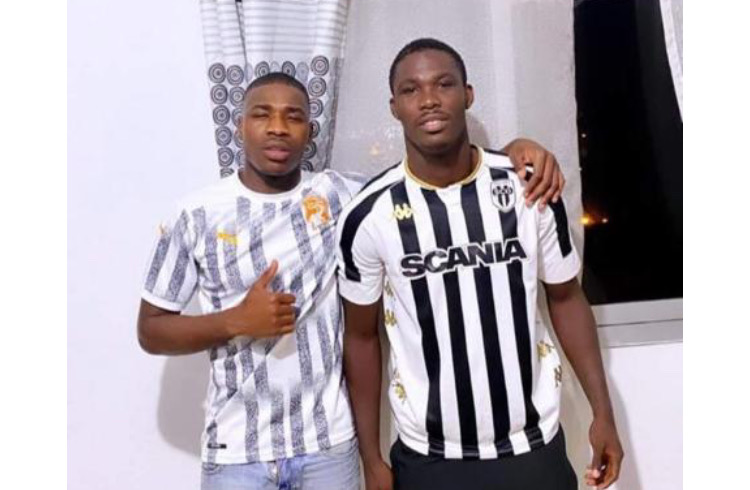
The original decision by FIF was that the contract signatures had been forgeries. This decision was reversed by the Commission de recours – the appeals panel of the Ivorian FA – on 9 November 2022.
In Molde’s submission to CAS, the club spends a lot of ink on nudging the Sole Arbitrator (i.e. the CAS ‘judge’) presiding over the case, that he/she is not bound by the conclusion by the FIF appeals body.
The overturned forgery-claim decision by the FIF’s appeals panel rests on a signature analysis by a graphologist appointed by a civil court judge in Abidjan. As documents in Josimar’s possession show, the lawyer of Fofana’s mother protested the use of a graphologist, to no avail.
In the ‘answer to the appeal’, Molde asked the Sole Arbitrator to dismiss the findings of the Ivorian graphologist. Though, he was one of the witnesses called in the CAS hearing, giving in-person testimony.
Molde also hired the Swiss lawyer and forensic science expert Christian Jaccard, and spends numerous pages in the dossier on his opinion. Jaccard, although based in Switzerland, was not present at the CAS hearing, giving his testimony via videolink.
Atta Aneke, though, was not called to give testimony – contrary to the wishes of Abidjan City.
“Mr Aneke is the key. He knows everything. He represented the club, the player and paid money to the mother. He should have been here,” Marco Taddei Né said after the proceedings ended at 20:00, two and a half hours after its 17:30 scheduled finish.
Before Molde and Atta Aneke entered the picture, the relationship between Marco Taddei Né and Fofana’s mother was family-like.
“She said to me, ‘you are the father of Datro’. All mothers say that. Because we care about their sons. Our players, including Datro, call us ‘uncles’, even after they have left the club,” he says.
After the CAS hearing, David Datro Fofana and the delegation from Côte d’Ivoire shook hands.
“It was a long day, but I’m positive;” Marco Taddei Né adds.
Molde club secretary Snorre Strand, too, said it had been a long day and a good hearing. He didn’t want to comment any further.
Asked how he felt, after spending his youth at Abidjan City and now facing them in a CAS hearing, David Datro Fofana considered providing an answer, but decided against it.
“Too tired,” he said
The time between a CAS hearing and a decision should take no more than four months, but have been known to drag on for up to a year.
In an email Atta Aneke denies having paid Fofana’s mother 20 000 euro, and declines to comment further on an “ongoing Fifa case.”
Molde FK not responded to our questions sent by email:
Molde claims ACFC forged two contracts with David Datro Fofana,when he was 14 and when he was 16. How likely is it really that a development club in Africa forges contracts with its players?
What does Molde think is the club’s motive for doing so, all the while he also played for that club?
In the submission to CAS, Molde writes the following:
“What the Player and Molde cannot accept is ACFC resorting to unlawful means and pressures to extort financial benefits which are not due.”
Is Molde claiming the club is a victim of extortion?